Support Page Content
Shattuck History Student Lounge
Shattuck History Student Lounge
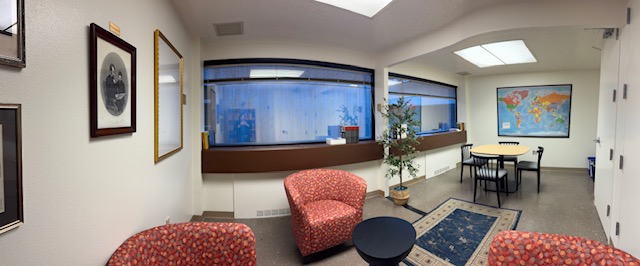
The Shattuck History Student Lounge at California State University, Sacramento is a welcoming gathering place created for History students to meet, study, converse, and build an intellectual community beyond the formal classroom. Dedicated to Elizabeth Johnson Horr Shattuck and her longstanding commitment to Sacramento State students, the lounge recognizes that a university education develops not only through lectures, assignments, and examinations, but also through the relationships students form with one another. It is a place where conversations can begin with a question from class, develop into spirited debate about the past or present, and just as easily turn into laughter, friendship, and the ordinary exchanges that make students feel that they belong to a university community.
Why was the lounge created?
The lounge serves undergraduate and graduate students studying History at Sacramento State, including students in the Bachelor of Arts in History, Master of Arts in History, and Master of Arts in Public History programs. Unlike the more formal Peter H. Shattuck Green and Gold Room, the Student Lounge is intentionally informal. Sacramento State describes it as a place where History majors and minors can relax, socialize, study, talk, and collaborate in an environment less formal than a classroom or library. Its comfortable seating, tables, and other furnishings were selected to encourage students to spend time together, unwind between classes, and connect with their peers.
This informality is central to the purpose of the Shattuck History Student Lounge. Some of the most valuable intellectual experiences at a university occur outside scheduled class periods. A discussion begun in a history seminar may continue in the lounge long after class has ended. Two students may disagree over the interpretation of a primary source, the causes of a revolution, or the meaning of a political movement and continue debating the question over lunch. A graduate student may offer advice to an undergraduate considering graduate school. Students may compare research discoveries, recommend books, discuss current events through the perspective of history, or simply share stories about their classes and professors. At other times, the room may be filled with conversation about music, sports, films, families, careers, or weekend plans. All of these interactions contribute to the life of the space.
What makes the space significant?
The lounge therefore reflects an important principle of higher education: intellectual community is built through human connection. History in particular thrives through conversation. Historians ask questions about evidence, causation, change, continuity, memory, identity, and human experience. Those questions rarely produce simple answers. Students learn to listen to competing interpretations, defend their own conclusions with evidence, reconsider assumptions, and recognize that reasonable people can examine the same historical problem from different perspectives. Sacramento State’s Shattuck programs similarly emphasize intellectual discourse, scholarship, meaningful discussion, and critical thinking about the past and its continuing relevance.
The Shattuck History Student Lounge gives those habits of mind an everyday home. Debate in such a space does not need to resemble a formal academic exercise. It can be spontaneous, lively, humorous, and occasionally unpredictable. A conversation about an assignment can become a debate about democracy; a discussion of colonial America can raise questions about contemporary citizenship; and a conversation about a historical film can lead students to question how societies remember their past. The value lies not only in reaching conclusions but in learning how to ask better questions, explain ideas clearly, listen carefully, and respond thoughtfully to people who see a subject differently.
Just as importantly, students need places where they can have fun. College life should provide opportunities for friendship and camaraderie alongside intellectual challenge. A student lounge allows students to become acquainted as people rather than merely as classmates who happen to occupy neighboring seats for a semester. Those relationships can make an academic department feel smaller, more welcoming, and more personal. They can also create informal networks of support through which students share information, encourage one another through difficult assignments, celebrate accomplishments, and develop friendships that may continue beyond graduation. The lounge gives the History Department a place where this sense of belonging can develop naturally.
Honoring Elizabeth Johnson Horr Shattuck
Elizabeth Johnson Horr Shattuck, for whom the Shattuck History Student Lounge is dedicated, has been a devoted philanthropist and longtime supporter of Sacramento State. She was married for 55 years to Peter H. Shattuck, the beloved Sacramento State Professor of History who joined the University in 1965 and devoted his career to teaching students and studying early American history. Following Peter Shattuck’s death in 2015, Elizabeth continued and greatly expanded the family’s support of the University. She established the Shattuck Endowment and the Peter H. Shattuck Endowed Chair in Colonial American History and has supported scholarships, research opportunities, History Day activities, and resources for students experiencing financial barriers. Sacramento State reported in 2024 that her giving to the University had exceeded $2 million. Her philanthropy has also extended throughout the Sacramento community to organizations concerned with housing, literacy, libraries, conservation, and other community needs. In recognition of her exceptional commitment to Sacramento State, the Sacramento State Alumni Association honored Elizabeth H. Shattuck with its Honorary Alumna Award in 2024.
Mrs. Shattuck’s support of the Student Lounge reflects a broader belief that students need more from a university than classrooms alone. She has emphasized both student support and the development of critical thinking, observing that society needs graduates who emerge into citizenship prepared to think critically and become good citizens. The Shattuck History Student Lounge gives physical expression to that philosophy. Socializing spaces on a university campus help create well-rounded students because they allow intellectual development and social development to occur together. Students learn from professors, books, archives, and assignments, but they also learn from one another. Through conversation, disagreement, humor, friendship, and shared experience, they encounter perspectives different from their own and learn to articulate what they believe and why they believe it.
For students of history, this process has particular importance. Thinking critically about the past provides tools for understanding the present, while conversations about both past and present encourage students to imagine the future they will help create. Peter Shattuck taught his students that understanding the present requires understanding the past, a philosophy his family’s support has helped preserve at Sacramento State. The Student Lounge extends that idea beyond formal instruction by creating a place where students can test their understanding in conversation with their peers. In this setting, history becomes not merely a subject that students study but a way of thinking about the world.
How does the lounge continue the Shattuck family legacy?
The lounge also represents the Shattuck family’s larger relationship with Sacramento State. Peter Shattuck dedicated his professional life to teaching History at the University, while Elizabeth Shattuck has worked to ensure that future generations of students have opportunities, resources, and spaces that help them succeed. Her support has included the Elizabeth Shattuck Resource Fund, which assists History students facing financial and other barriers by providing textbooks, supplies, and academic resources, as well as scholarships and research opportunities associated with the Shattuck Endowment. Her commitment has therefore addressed both the practical needs of students and the intellectual environment in which they learn.
In the end, the Shattuck History Student Lounge is valuable because of what students bring into it. Furniture and walls can create a room, but conversation creates a community. Every discussion between classmates, every debate about a historical question, every shared discovery, every study session, and every moment of laughter contributes to the character of the space. The lounge invites students to linger rather than simply pass through—to know their classmates, exchange ideas, challenge one another, and develop a sense that they are participants in a living community of historians.
That purpose makes the Shattuck History Student Lounge an especially fitting tribute to Elizabeth Johnson Horr Shattuck. Her support of Sacramento State has consistently centered on students: their education, their opportunities, their ability to overcome barriers, and their development as thoughtful members of society. The lounge carries that commitment forward by giving students something both simple and essential—a place of their own. It is a place to study and to relax, to agree and disagree, to speak and to listen, to think seriously and laugh freely. Above all, it is a place where Sacramento State History students can learn from one another as they develop the knowledge, friendships, intellectual confidence, and critical habits of mind that will help them understand the past, engage thoughtfully with the present, and participate meaningfully in shaping the future.
Student Lounge 360-Degree Panoramic View
Select an image to explore a 360-degree panoramic view of the Shattuck History Student Lounge.

