Story Content
Professor, student researchers design implantable medical chips to diagnose, treat gastric disorders
November 06, 2026
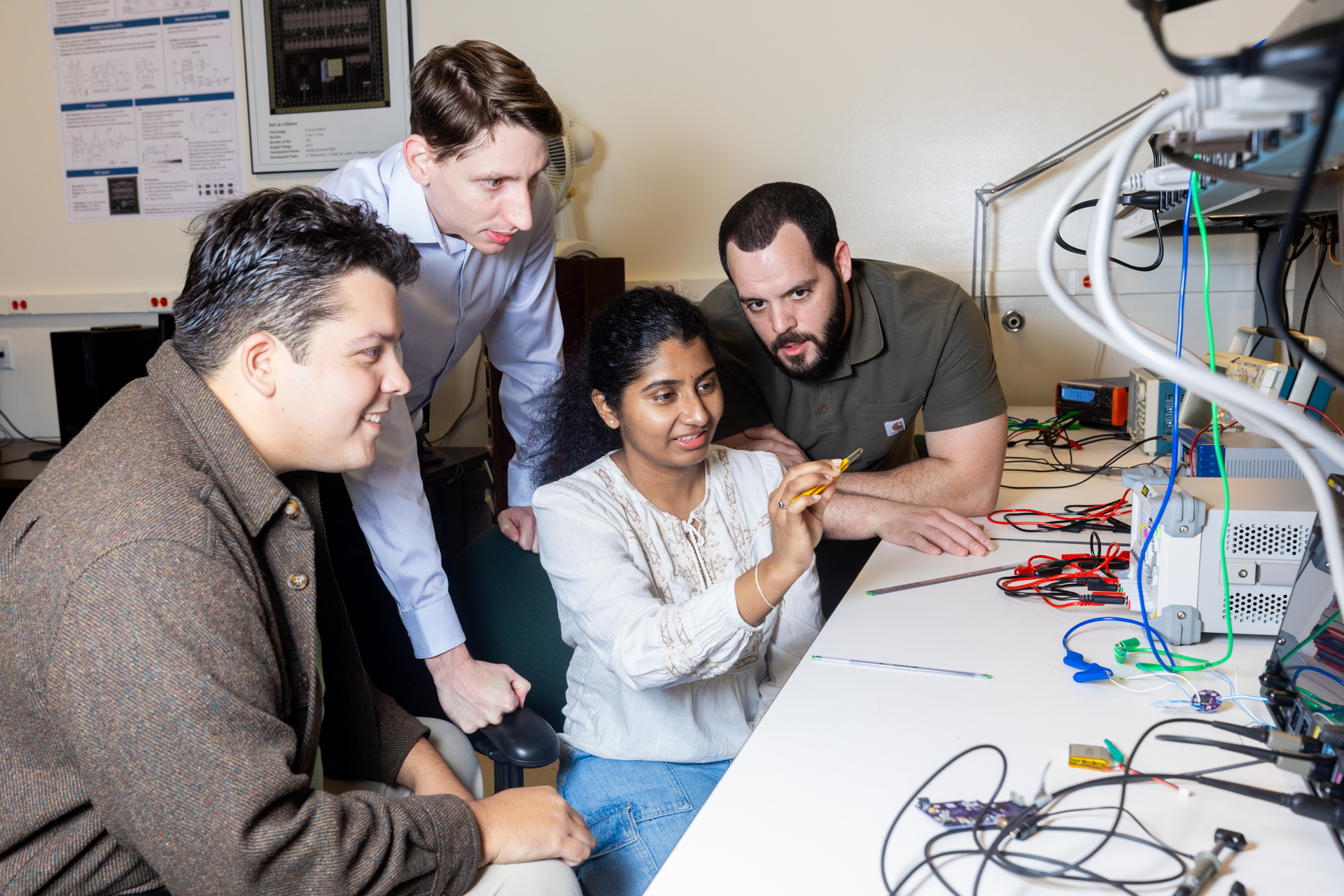
A Sacramento State professor and student researchers have designed and built implantable medical chips to map the human gastric system and jolt it into digesting food.
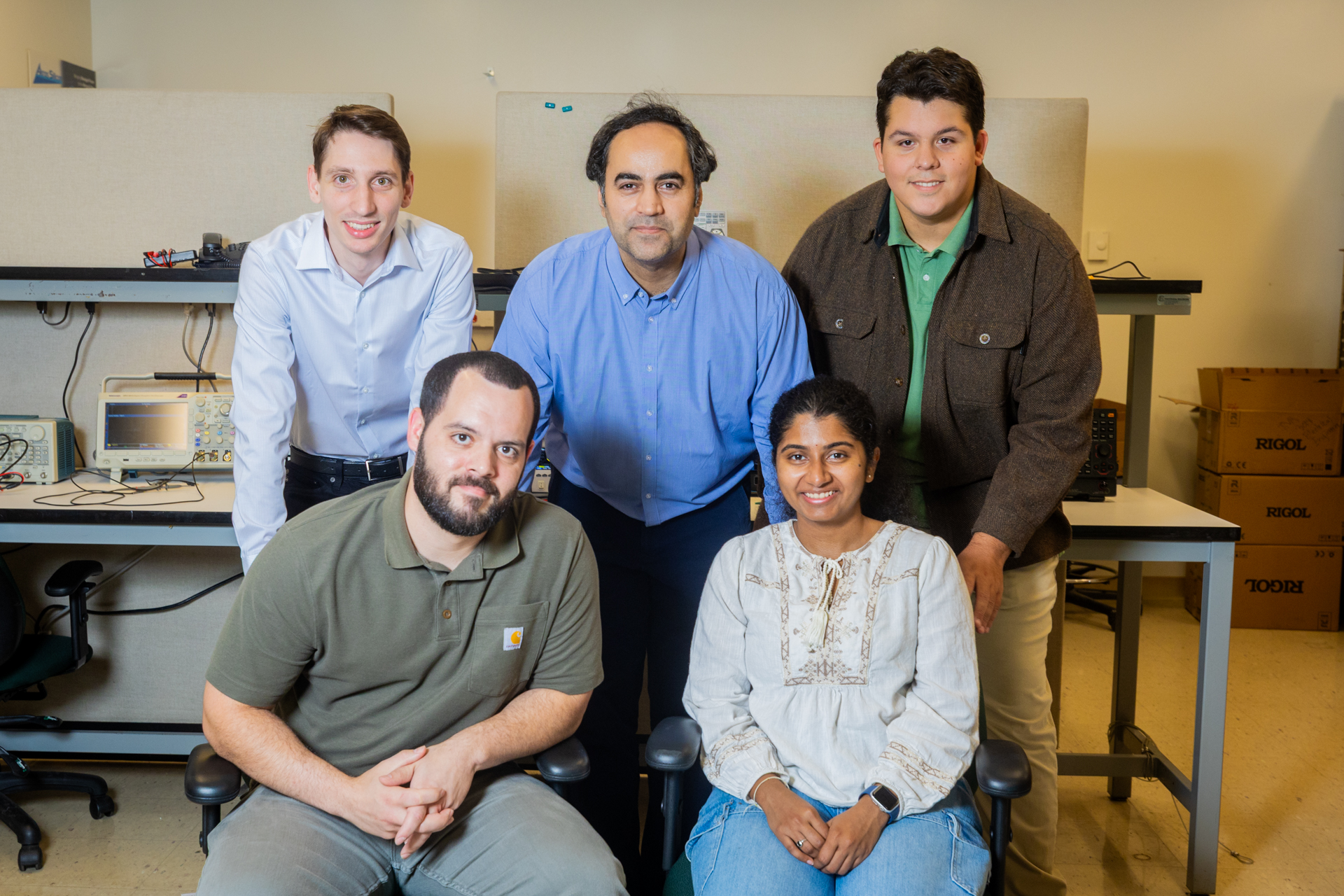
The work by Electrical and Electronic Engineering Assistant Professor Amir Javan and four of his students combines integrated-circuit engineering with biomedical research to diagnose and treat disorders such as chronic indigestion and gastroparesis, which occurs when muscles in the stomach don’t move.
“These are among the most widely experienced diseases in the U.S., particularly in patients with diabetes or obesity,” Javan said. “If successful, we will be able to understand what is happening inside the stomach and how we can directly treat these disorders of the gastric system.”
Nearly 30 million people in the U.S. have been diagnosed with diabetes, according to the U.S. Center for Disease Control.
The U.S. Department of Health and Human Services claims more than 40 percent of adults in this country have obesity, and 9.2 percent are considered severely obese.
Javan received funding from the CSU Biotechnology Program and U.S. Department of Defense to support education and training in integrated circuits as well as research on the neurophysiology of the gastrointestinal system and the development of implantable technologies to treat disorders.
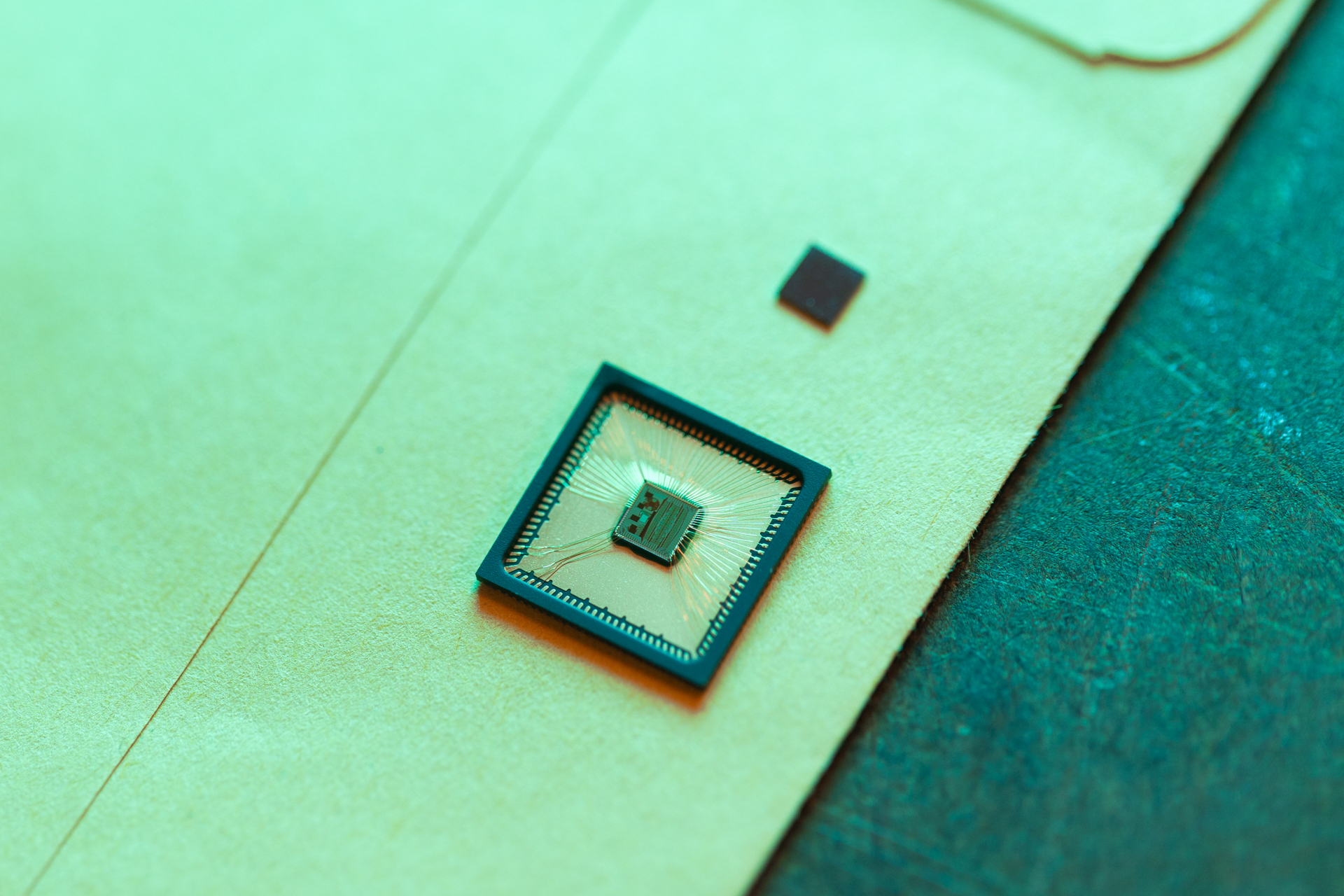
They spent a little over a year developing two medical chips — small enough to fit on the tip of a finger — that could be surgically implanted in a human body. One chip is designed to capture and record the activity of the gastric nervous system, while the other emits tiny electronic pulses to stimulate food digestion much like a pacemaker jump-starts the heart.
“Our organs communicate with the brain through the neural network,” Javan said. “When we eat food, the sensory functions activate and inform the brain, and the brain signals the stomach to process and digest food.”
People suffering from certain gastric disorders can’t digest food properly because communication between the brain and the stomach, or the stomach's own neural control system, does not work properly. This can happen when the nerves that carry signals between them are damaged or when the signaling process is disrupted.
Sacramento State’s Electrical & Electronic Engineering Program is ranked among the top in the nation by US News & World Report.
“With no effective medication or surgical procedure for gastric neurological disorders, the only viable option is to force the muscle of the stomach to contract and digest food by using electrical pulses,” Javan said.
Working under a tight deadline, the students and their professor finished their designs in June and sent them off for manufacturing in Taiwan. The completed chips were delivered last month.
“We get some exposure to chip design in our courses, but you don’t often have funding to actually have a chip fabricated,” graduate student Alex Stevens said. “I’ve heard stories of people working on bigger teams with more time who haven’t made it to tape out, or chip fabrication. “So I’m proud that we did it.”
Each chip is barely three millimeters in size.
“It’s really fascinating to me how you can do so much in devices that are so small,” said Miles Lantz, an undergraduate in Javan’s class.
Javan hopes to soon begin working with either UC Davis or a university in New Zealand to test the chips in pigs or rats before eventually conducting human trials.
For student researchers, it was an opportunity to gain experience in designing advanced integrated circuits and semiconductor systems and meeting stringent requirements for manufacturing.
Sacramento State’s Electrical & Electronic Engineering Department is ranked among the top in the nation by US News & World Report.
“In regular classwork, you reach a threshold and you never complete the process,” Electrical and Electronics Engineering graduate student Kyryl Stolyarchuk said. “Being a part of this research project, we were able to fully complete the design.”
Students also had access to advanced industry tools which they learned to use through trial and error. They even problem-solved their way through a software glitch that threatened to derail the project days before the deadline.
“We formed a kind of trauma bond,” Lantz said. “But all those late nights, we built a relationship and we still talk even though I’m not in Sacramento anymore.”
Graduate student Jhansi Sri Priya Peddi said the experience helped her focus on what area of circuit engineering she wants to pursue.
“The connection between engineering and healthcare made my work feel more meaningful and impactful,” Peddi said. “We weren’t just designing a chip for the sake of designing. There’s a real-world problem we’re trying to solve.”
All the students were named as authors in Javan’s research papers and have made presentations at various conferences.
“At the end of the day, there’s going to be doctors and other researchers and engineers who will complete this, but just to be one small part of that puzzle is very, very cool,” Stolyarchuk said.
Media Resources
Faculty/Staff Resources
Looking for a Faculty Expert?
Contact University Marketing & Communications
(916) 217-8366
communications@csus.edu