Support Page Content
Community-Engaged Research/Creative Activities
Definition of Community-Engaged Research/Creative Activities (CERCA)
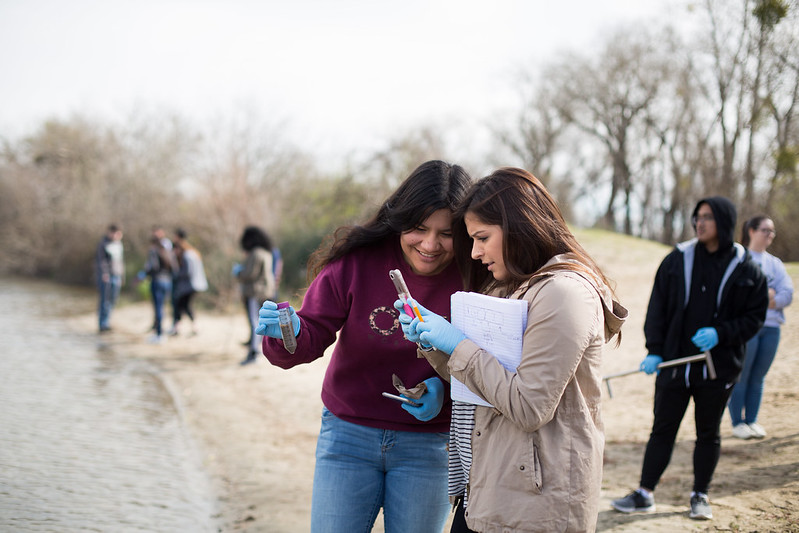
 CERCA includes research and creative activity in service to community partners. It often takes place in community settings and involves community members in the design and implementation of scholarly projects, and demonstrates respect for the contributions made by community partners. At CSUS, CERCA rejects extractive research practices and moves beyond the common research principle of "doing no harm" to the communities involved by centering the strengths and desires of communities and valuing their expertise in the research process.
To align with this definition, the following principles guide the development of CERCA projects involving collaboration between university researchers and community partners, whether the community partners are formally structured community-based organizations or informal groups of individual community members.
How To Get Course Designation for CERCA
CERCA Course Attribute Guidelines & Process.pdf
CERCA Course Designation Reflective Statement Guidelines.pdf
CERCA Principles for Sacramento State
- CERCA engages university faculty, students and staff with diverse partners and community members in reciprocal partnerships that strive for collaboration, co-creation and co-learning. These kinds of partnerships.
- Recognize the unique contributions and perspectives of students, faculty, staff, alumni, and community members
- Validate multiple sources of knowledge and promotes the use of multiple methods of inquiry and of dissemination or the knowledge produced
- Are often participatory in some way, which can happen along a spectrum of participation in research from consultative research partnerships to community partners as co-researchers
- CERCA can center caring interdependence:
- University-community partnerships should be characterized by respect, care, and sensitivity towards our shared history, cultural diversity, power dynamics, and mutual reliance on one another for collective success.
- CERCA should strive for equity-oriented collaboration:
- By intentionally developing fair, equitable, and inclusive collaborations that distribute benefits and burdens equitably among all participants and thus reject activities that are exploitative and/or extractive.
- This can include providing resources provided to community partners for their collaborative efforts (e.g., a portion of research funding, ownership of data and/or products of research, accessible dissemination products). It can also include knowledge that respectfully addresses the unique needs, contributions, and perspectives of historically underserved communities and communities of color
- CERCA efforts can seek to address critical social issues and contribute to the common good of society, and therefore center the advancement of social justice and the public good:
- By leveraging the collective resources and expertise of our university and community partners, we work towards promoting equity, justice, and inclusive prosperity for all.
- CERCA can include knowledge production, social action, and other social change efforts for the purpose of achieving shared university and community goals, such as social justice, environmental sustainability, and social mobility. That is, CERCA is focused on impacts beyond creating knowledge that lives solely at the university and primarily engages or serves members of our institution.
These are proposed by the CEC and included in our trainings. They have been created by aligning general principles of CERCA with the University’s definition of Community Engagement and the core values associated with Community Engagement at Sacramento State.
Fall 2025 CER Roundtable
On November 17, 2025, the CEC co-hosted a Community-Engaged Research Roundtable with the College of SSIS. Please see this research summary from the four faculty presenters to learn more about their community-engaged research methods, partnerships, outcomes, and advice for other faculty.
Research Summary
Perks of CERCA
- Can contribute to translational science.
- Has been recognized by the NIH for its capacity to address the weak link between research and clinical practice.
- Because it is often tied to local communities, CERCA can produce richly contextualized work that has ecological validity and the ability to address local needs.
- Often supports new approaches that are gaining acceptance in an ever-widening arena, placing engaged scholarship on the forefront of academic inquiry, discovery, integration, and application
- Often embraces methodologies outside of the dominant, mainstream ways of creating knowledge. For example, qualitative research is often used.
- Often supports new approaches that are gaining acceptance in an ever-widening arena, placing engaged scholarship on the forefront of academic inquiry, discovery, integration, and application.
Goals of CERCA
- Promote engaged scholarship that makes a real difference in the lives of the communities with whom we collaborate
- Bring together knowledge processes of the university with knowledge assets of local communities (i.e., groups, organizations, networks)
- Create knowledge that is impactful for scholars and community members alike
- Makes for good, impactful scholarship/creative activity
Why CERCA?
When done well, it is:
- Great for our students
- Great for knowledge
- Great for communities!

Contact Information
Questions? Email Faculty Associate ellison@csus.edu or cec@csus.edu