Story Content
CSU, Sac State honor beloved Black Honors College dean for her dedication to equity, education

April 09, 2026
Boatamo Mosupyoe grew up in a place and time when the color of her skin determined where she could play, go to school, or even live.
Her early education in Apartheid South Africa was little more than training to be a servant in a white home.
Instead, the beloved Sacramento State professor, affectionately known as “Dr. Ati”, dedicated her life to equity and education, ensuring all students would have the chance to succeed.
Mosupyoe received the 2026 Wang Family Excellence Award for Outstanding Staff Performance in recognition of her work developing and launching the nation’s first Black Honors College (BHC).
“Dr. Mosupyoe consistently practices transformative
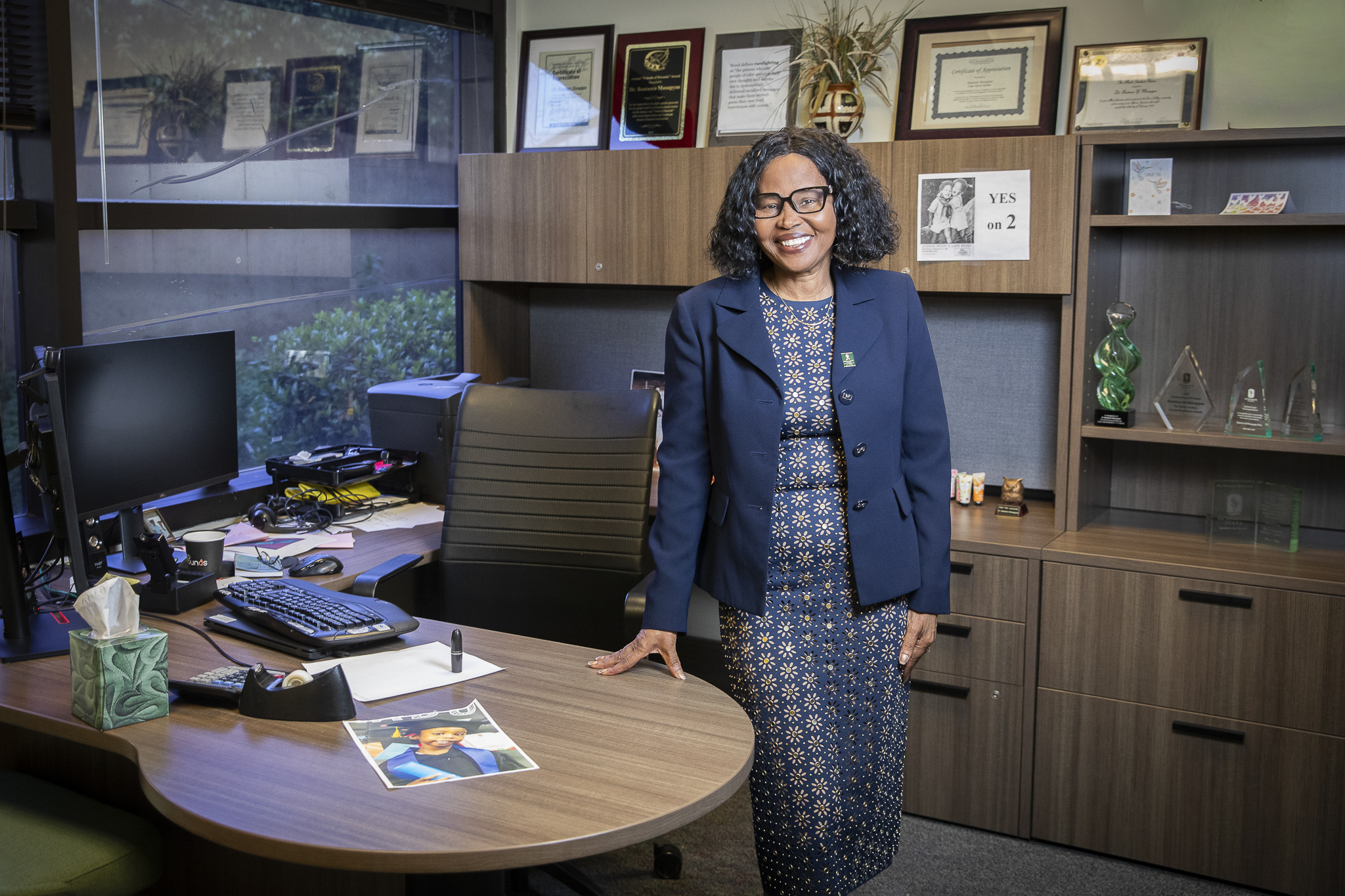
leadership and an unwavering commitment to advancing education equity,” President Luke Wood said. “She demonstrates every day why she was more than deserving of this prestigious recognition.
“She ensures that everyone feels valued and heard. Her strong vision and uncompromising record of service have made her a role model and inspiration to everyone on campus.”
During her 23 years at Sacramento State, Mosupyoe has pushed for more diversity among students and faculty as well as curriculum, while working tirelessly to increase graduation rates.
“Dr. Ati calls us her pride,” BHC student Naomi Thrower said. “We can see the dedication she pours into us. She believes in us and wants us to succeed, and we know she will help us do anything we can to become the courageous leaders of tomorrow.”
Mosupyoe was born in South Africa, the third of six children. Her parents named her Boatamo, meaning “many girls,” but everyone called her Ati for short.
She grew up under Apartheid, an oppressive, legalized system of segregation.
“The land was taken away from the indigenous people,” Mosupyoe said. “Black people like me were not allowed to vote. We were not allowed to go to certain bathrooms, and parks were always for white people.
“There was segregation in schools, hospitals, even graveyards.”
In school, Mosupyoe learned skills like sewing, cooking, and cleaning.
“All the time my mom would say to us, especially the girls, ‘I don’t want you to end up working for white people. I want you to get your education,’” Mosupyoe said.
And she did, first earning her teacher’s diploma from Batswana Training College then bachelor’s degrees from University of the North and University of South Africa.
Mosupyoe was married and pregnant with her third child when her husband and three-year-old son were killed on the same day.
Months later, she left South Africa with an infant and toddler, settling in California, where she went to UC Berkeley to pursue her master’s degree and PhD in social cultural anthropology.
“Then South Africa became free,” she said. “I stayed in the U.S. instead of going back home. My two girls grew up here. But the struggle was not in vain.”
Mosupyoe said it was “ubuntu” that brought her to Sac State.
Although she had offers to teach at seven California colleges and universities, Mosupyoe chose to become a Hornet due to the kindness of Anne Thomas, who corrected a typo in her presentation and reprinted it.
“She stayed for my presentation because she said it was powerful, and she said I was funny. Then she walked me to my car and gave me a hug,” Mosupyoe said. “I knew this was where I wanted to be.
“This was the type of ubuntu, humanity, that attracted me.”
Mosupyoe rose quickly through academia. She started at Sac State in 2004 as an assistant Ethnic
Studies professor, and by 2007 she was director of Pan African Studies.
She also served as head of the Cooper-Woodson College Enhancement Program, where she worked on the recruitment, retention, and graduation of Black students. In 2011, Mosupyoe was named chair of the Ethnic Studies Department, the first woman to take on the role in 25 years.
“I saw how students struggled for classes,” Mosupyoe said. “When I was an assistant professor, there’d be a long line of students in the corridor trying to come and sign up for my classes.
“In all these capacities, I saw how students needed classes.”
She co-led Hornet Launch to pre-enroll first-time students, ensuring the classes they took counted towards their degrees to ensure they graduated in four years.
“When you know about the history, the contributions, the cultures of anybody, it makes you understand people better. It makes you able to interact with people better. It helps everybody to build a better world.” -- Black Honors College Dean Boatamo Mosupyoe
Mosupyoe promoted diversity and Ethnic Studies at a time when it was under attack. She served on the Chancellor’s Task Force on the Advancement of Ethnic Studies, clearly defining the discipline as the study of the historical struggles of the Asian American, Native American, African American, and Latinx communities.
Ultimately, her efforts led to the passage of AB 1460, establishing Ethnic Studies as a graduation requirement for all CSU students.
“When you know about the history, the contributions, the cultures of anybody, it makes you understand people better. It makes you able to interact with people better,” Mosupyoe said.
“It helps everybody to build a better world.”
Mosupyoe’s daughter died suddenly while she was still working on the task force.
“I’ve had students come to me with tears in their eyes saying they don’t see themselves represented in their classes. I would say to them, ‘You’re in my class now. You will be represented,’” Mosupyoe said.
“When I think about the success of my work for Ethnic Studies, I dedicate that to my daughter.”
In February 2024, Wood asked her to lead a new college that would be like a Historically Black College and University (HBCU) on the West Coast, the first of its kind in the country.
“I was elated, because I knew the Black Honors College was going to make a difference,” she said.
The Black Honors College (BHC) was designed to offer a rigorous, co-curricular experience for any student interested in Black history, culture, and contributions. Open to all majors, BHC students take their general education courses together in classes of 30 or less.
Students also participate in internships, mentorships, research opportunities as well as creative arts programs, and live together in campus housing.
In its second year, the Black Honors College already has more than 500 students enrolled.
“I want it to grow, and I want to continue to serve the students and make their experience meaningful,” Mosupyoe said. “I’ve been at Sac State more than 20 years. I stayed because there are wonderful people here.”
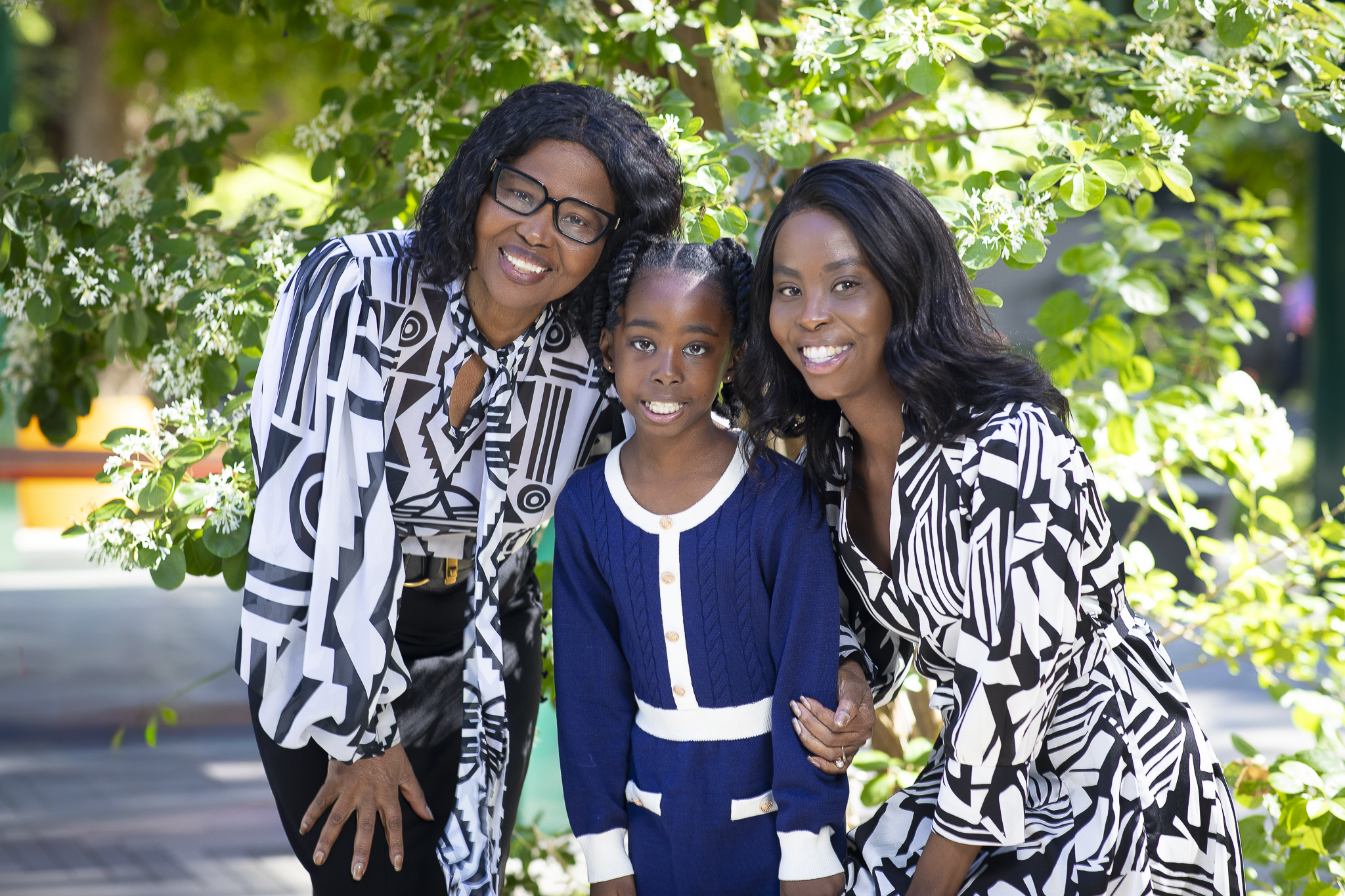
Mosupyoe triumphed through Apartheid and tragedy, finding meaning and purpose in her life’s work as well as joy shopping and getting her nails done with her eight-year-old granddaughter.
“I also love Disneyland,” she said. “I go every year.”
Media Resources
Faculty/Staff Resources
Looking for a Faculty Expert?
Contact University Communications
(916) 217-8366
communications@csus.edu