Story Content
Sacramento State’s unique collection tells story of Japanese American incarceration during World War II
May 28, 2026
To the untrained eye, the vest doesn’t look like much.
The crouching tiger painted on the back stands out among tiny red knots tied in neat rows and columns.
But the senninbari, or “thousand stitch belt” believed to bring courage and protection, is the most valuable item in the Japanese American Archive Collection at Sacramento State.
“Senninbari is usually an obi, which is like a belt or sash,” University Special Collections Archivist Julie Thomas said. “To have a vest is very unusual. So the fact that we have it, the history, the provenance, is super rare.
“It’s priceless for both its research value and financial value.”
Sacramento State’s widely-regarded Japanese American Archive Collection (JAAC), digitized for anyone to access online, is used by scholars all over the world. Every year, thousands of University students, as well as local school children, see — and sometimes touch — pieces from the collection in their classes or at community presentations.
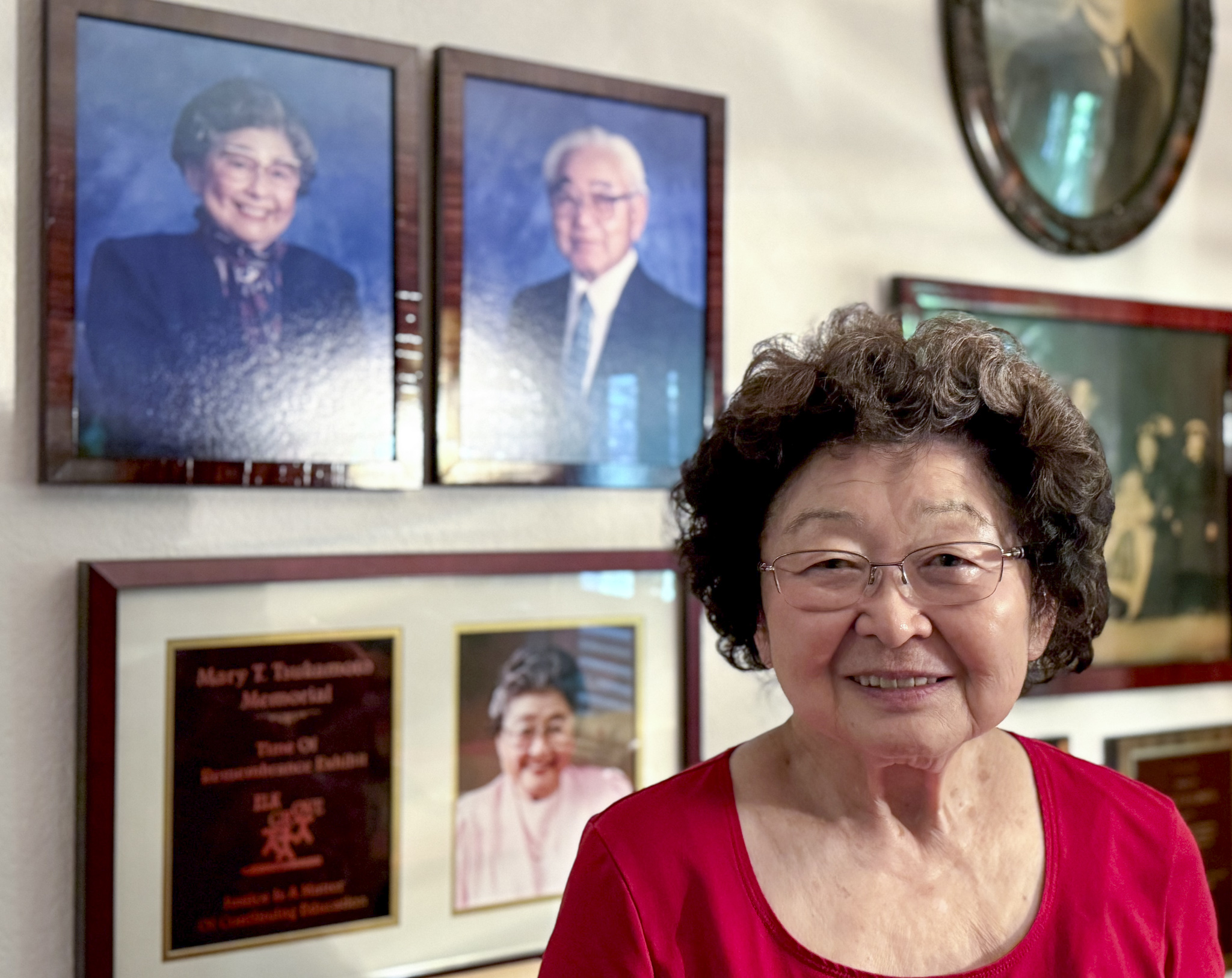
Made up of personal photos, documents, and belongings of Japanese Americans incarcerated during World War II, the purpose of the collection is to never forget.
“The children, the Nisei, are very adamant about continuing to educate the public,” Special Collections/University Archives Head Sarah Allison said. “They wanted a place where their families’ collections could go and be preserved and made accessible for future generations.
“They just want to make sure their history never gets lost.”
The Japanese American Archive Collection was established in 1994 when longtime Elk Grove teacher, civil rights activist, and Japanese American leader Mary Tsukamoto donated letters, photographs, and artifacts to the University.
Her one stipulation: Sac State had to release the items for educational purposes.
With Tsukamoto’s prompting, donations from the Florin Japanese American Citizens League, the Sacramento VFW Nisei Post 8985, and nearly 300 private individuals soon followed.
Today the archive houses more than 2,100 items, including photographs, letters, diaries, artwork, and oral histories — spanning from the pre-war years, the incarceration of Japanese Americans during World War II, and up through the grass-roots reparations movement.
Pieces of the collection are on loan all over the world, including the California Museum, the Smithsonian in Washington, D.C., and Heroes of Vosges Museum in France, where the primarily Nisei 100th Infantry Battalion and 442nd Regimental Combat Team liberated several towns.
Some materials were also part of a Smithsonian art exhibit that traveled to Tokyo, where the Emperor and Empress of Japan had a private showing.
“It’s arguably one of the best in the world, and that is because of its depth and breadth,” Thomas said. “It may not be the largest, but we have materials from the government, the military, the incarcerees, the Quakers who helped them, the neighbor who took care of them, and even the haters.
“History has many points of view.”
Sacramento State alumna Mary Tsukamoto’s legacy
Before the war, Mary Tsukamoto and her husband Alfred farmed grapes in Florin, home to hundreds of Japanese immigrants and their American-born children. But on February 19, 1942, President Franklin D. Roosevelt issued Executive Order 9066 removing 120,000 Japanese Americans living along the West Coast and forcing them to live behind barbed wire in remote, desolate concentration camps.
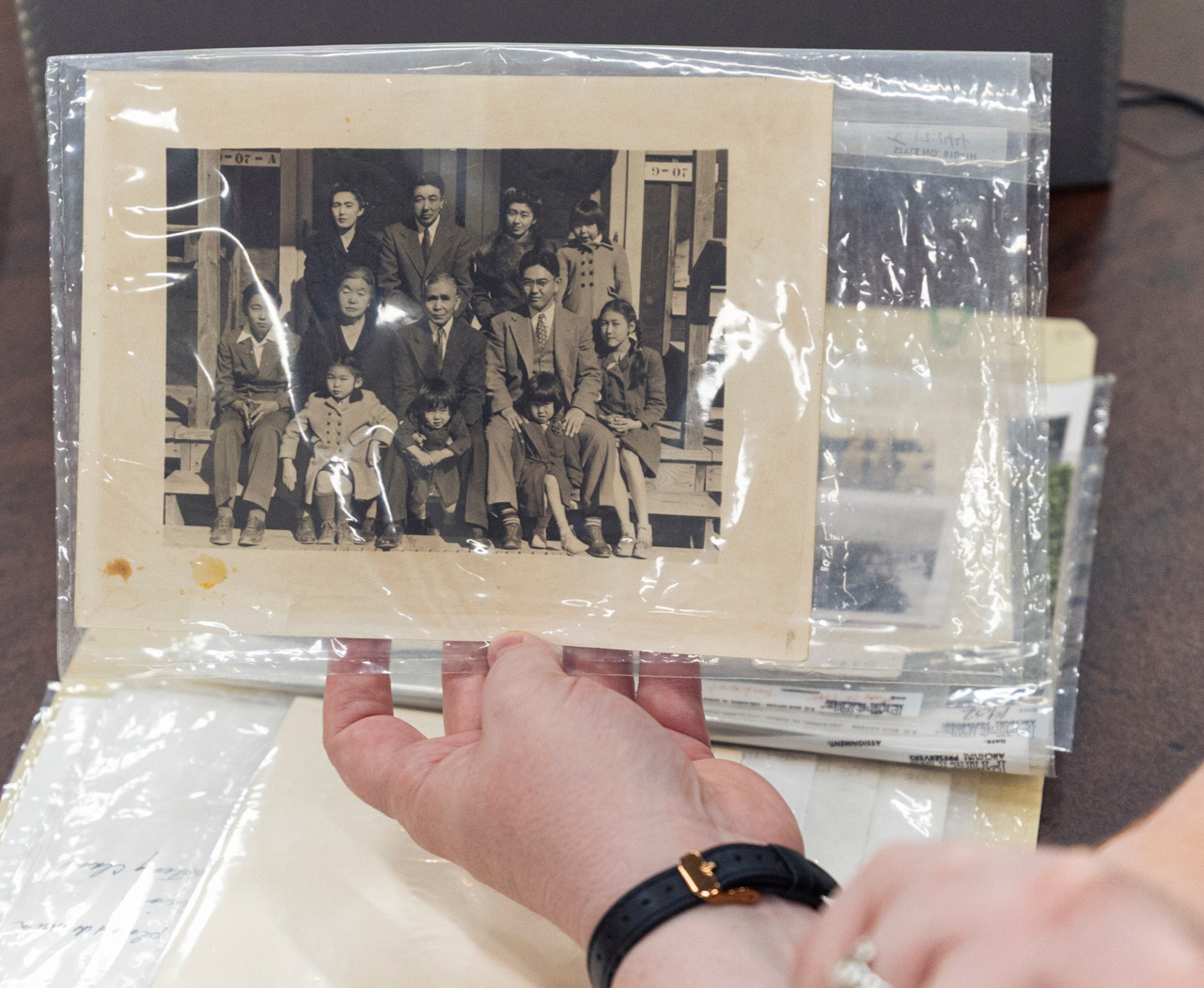
They could only bring what they could carry. Entire families were crammed into one-room wooden barracks.
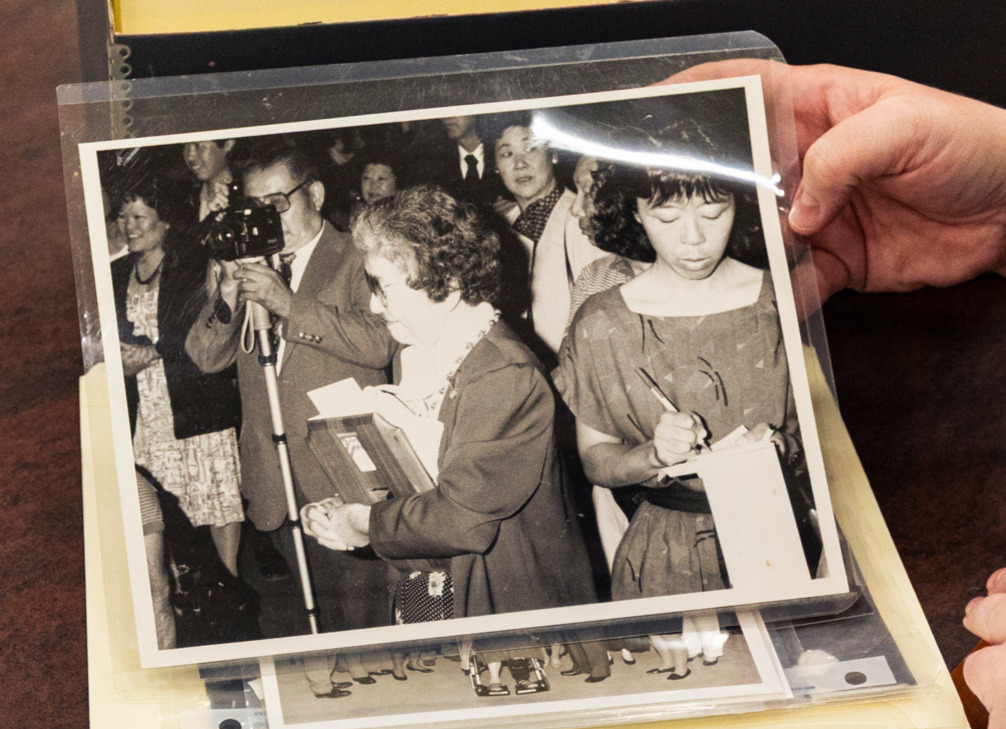
For many years, Tsukamoto didn’t speak of her wartime experiences.
“My mother always said she felt like a second-class citizen,” Marielle Tsukamoto said. “Because if you were a child of immigrants, you didn’t really count.
“Nobody wanted to be Japanese.”
Tsukamoto earned her teaching credential from Sacramento State and taught in the Elk Grove Unified School District for 26 years. When she retired in 1976, she served as director of Jan Ken Po Gakko, a summer program that teaches area children about Japanese American culture.
“One of the kids asked, ‘What did Grandpa do wrong? Why was he in prison?’” Marielle Tsukamoto said. “She realized these kids thought we were incarcerated because we committed a crime. Unless
we speak up, they’re not going to know that what the government did was unconstitutional.
“We did nothing wrong.”
Tsukamoto became active in the Civil Rights Movement. She developed lessons on the Japanese American experience during World War II that is now part of the statewide fifth-grade curriculum. She was a leader in grass-roots efforts that led to the passage of the Civil Liberties Act signed by President Ronald Reagan in 1988 effectively apologizing for the government’s mistake.
She also developed We the People, an exhibit on incarceration for the Smithsonian Institute’s American History Museum to mark the Constitution’s Centennial.
The collection tells a story
In December 1944, while the Tsukamotos were still incarcerated and living in a drafty barrack, Mary sent a Christmas card to President Franklin D. Roosevelt and his wife.
Their reply on White House stationery, signed by Eleanor Roosevelt herself, is just one of the pieces Tsukamoto donated to the collection.
“I am glad all is going well,” the First Lady wrote.
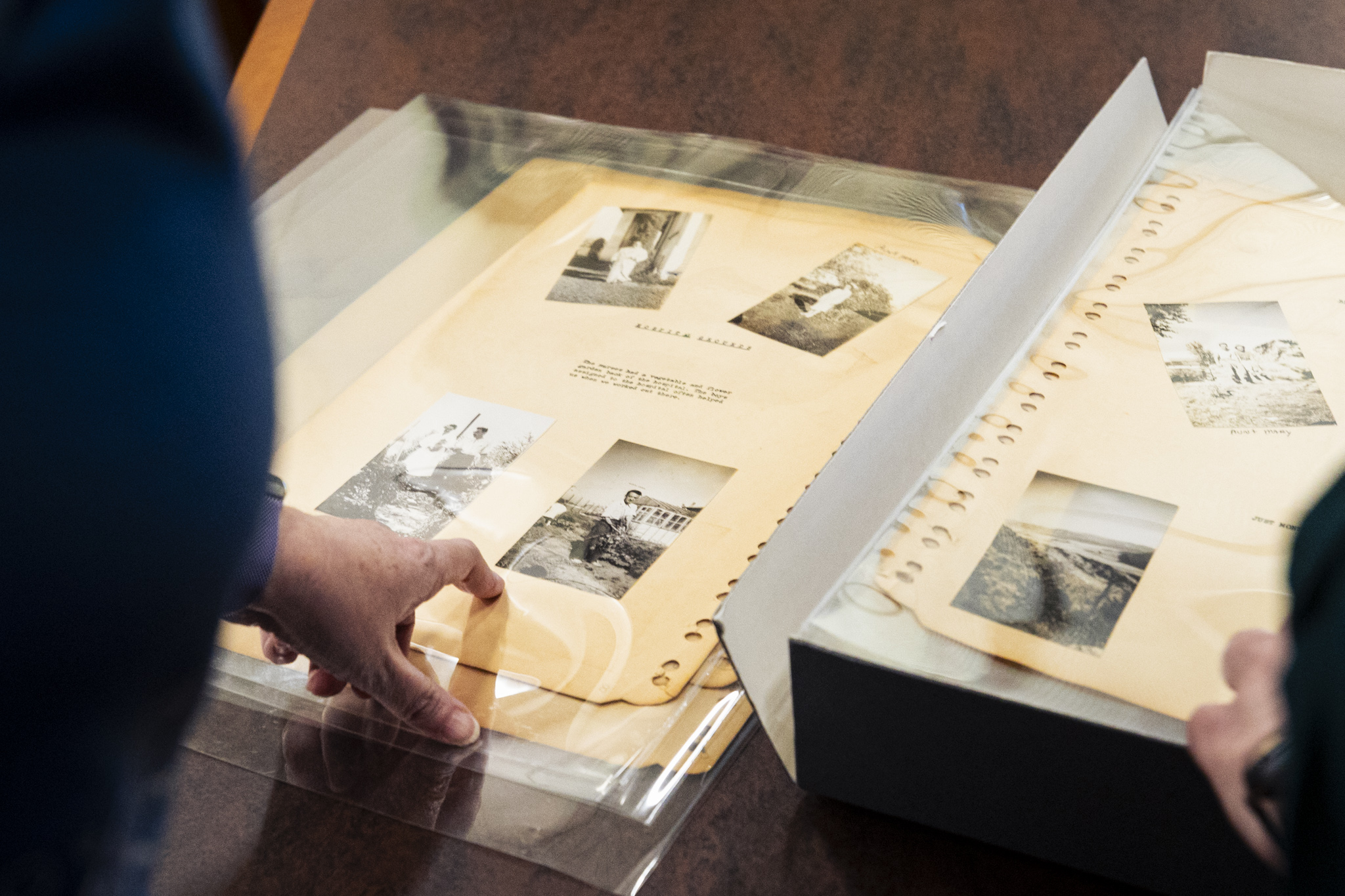
Photos and letters show how the incarcerees made the best out of a bad situation.
They worked and set up schools. They held dances, took walks and collected shells and arrowheads they found in the ground.
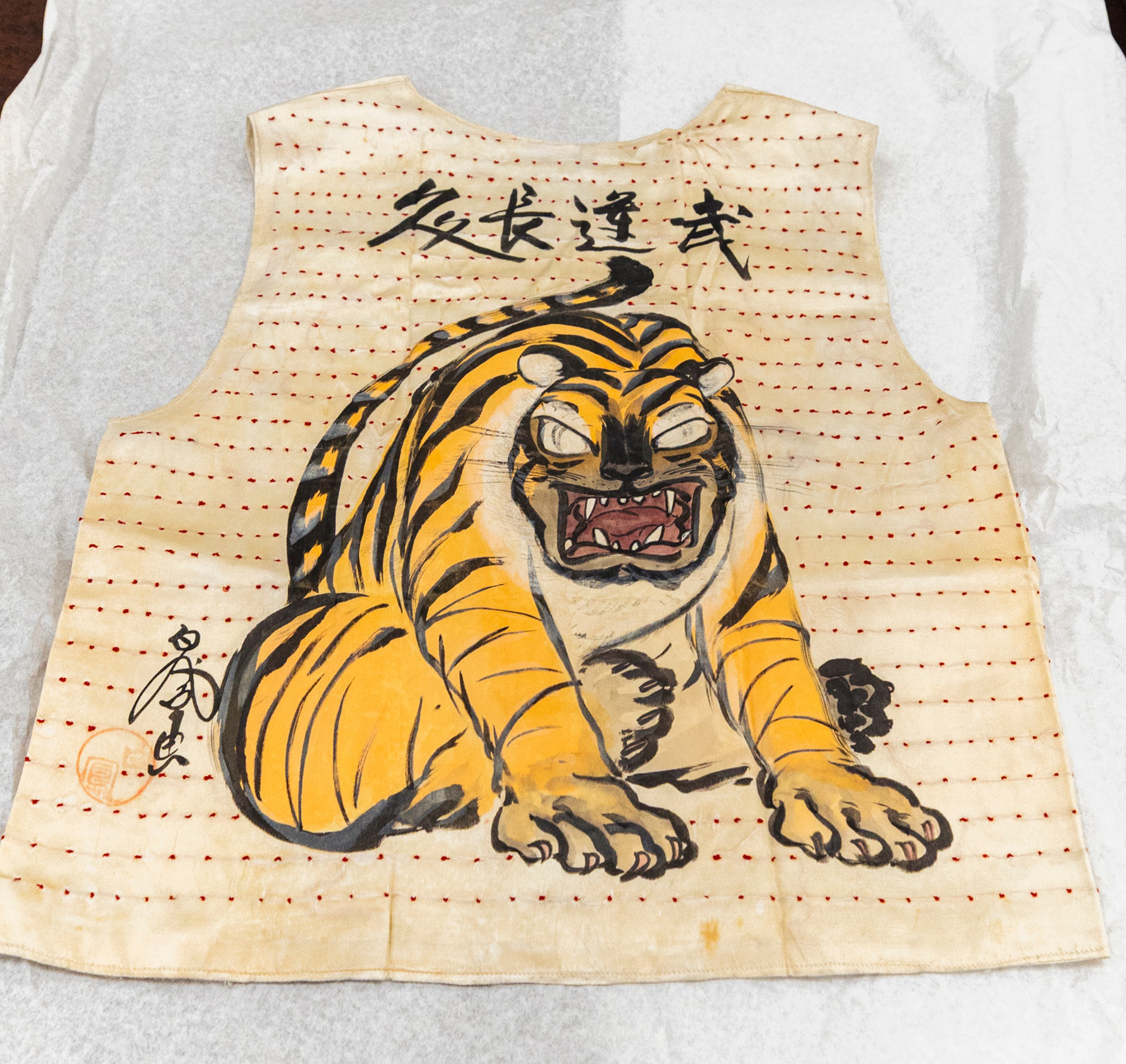
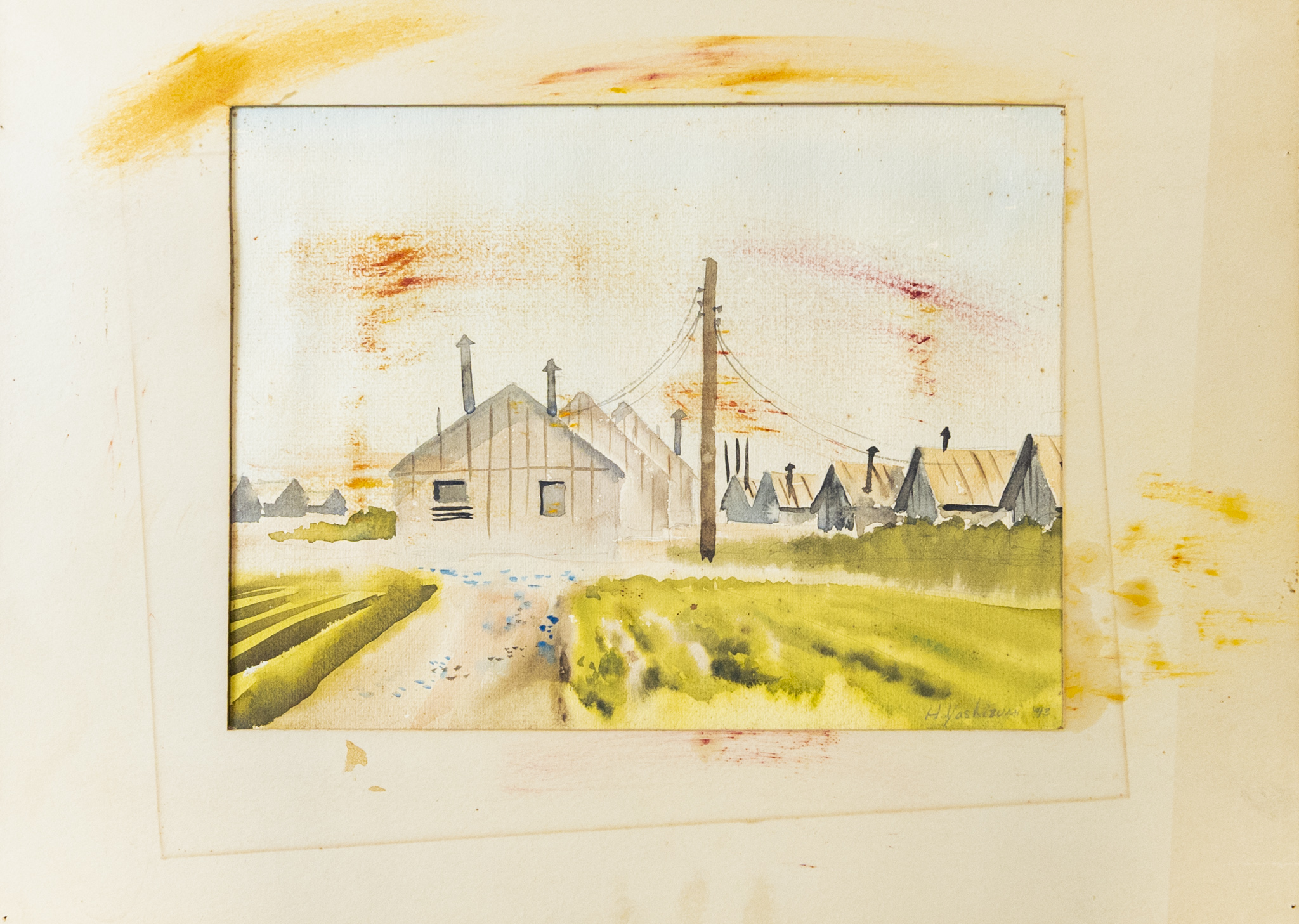
Classes on art, painting, doll-making and other crafts produced charcoal sketches and watercolor paintings of life in camp.
“This is my favorite,” Allison said, pointing to a painting of a woman and child walking hand-in-hand past rows of barracks, a watchtower in the distance.
“It feels weird to say that, because this is a painting that was done in an internment camp. It’s like they were trying to find hope. And that’s what comes through in these pieces.”
Part of the collection, housed in a storage facility, includes a wardrobe, table, and desk Sacramento carpenter George Kawasaki made in camp using pieces of scrap wood and packing crates.
“They used what was available,” University Archivist Lynn Sanborn said. “They had all these things to not only document what was happening to them, but have a sense of normalcy. There are so many different types of materials in this collection that it really gives people an idea of what happened.
“It can be a depressing collection. But it’s a very powerful collection.”
George Matsushita, a member of the 442nd Regimental Combat Team, wore the senninbari made by his mother while fighting in Italy during World War II.
“There’s even a spot of blood on it,” Thomas said. “The Japanese American soldiers were in a segregated unit, and many of them threw away their senninbari because it looked too Japanese. They wanted to be seen as patriotic.”
Making the collection available to anyone
In 2015, the National Park Service awarded a $321,000 grant to a group of 13 CSU campuses to digitize original documents related to the Japanese American incarceration.
Sac State, with the largest collection, received $40,000 to digitally preserve roughly 4,000 documents including letters, pamphlets, photographs and more.
“It’s the third leg of what we do,” Thomas said. “We collect, preserve, and make it accessible for anybody, anywhere to see.
“If it’s in a box in a basement, and nobody knows what’s in those boxes, it doesn’t exist.”
In addition to their families’ personal belongings and documents, the Japanese American community also gave money to preserve and support the use of the collection. Today, the JAAC Endowment funds two grants of up to $3,000 to pay travel expenses for undergraduate researchers to use the collection.
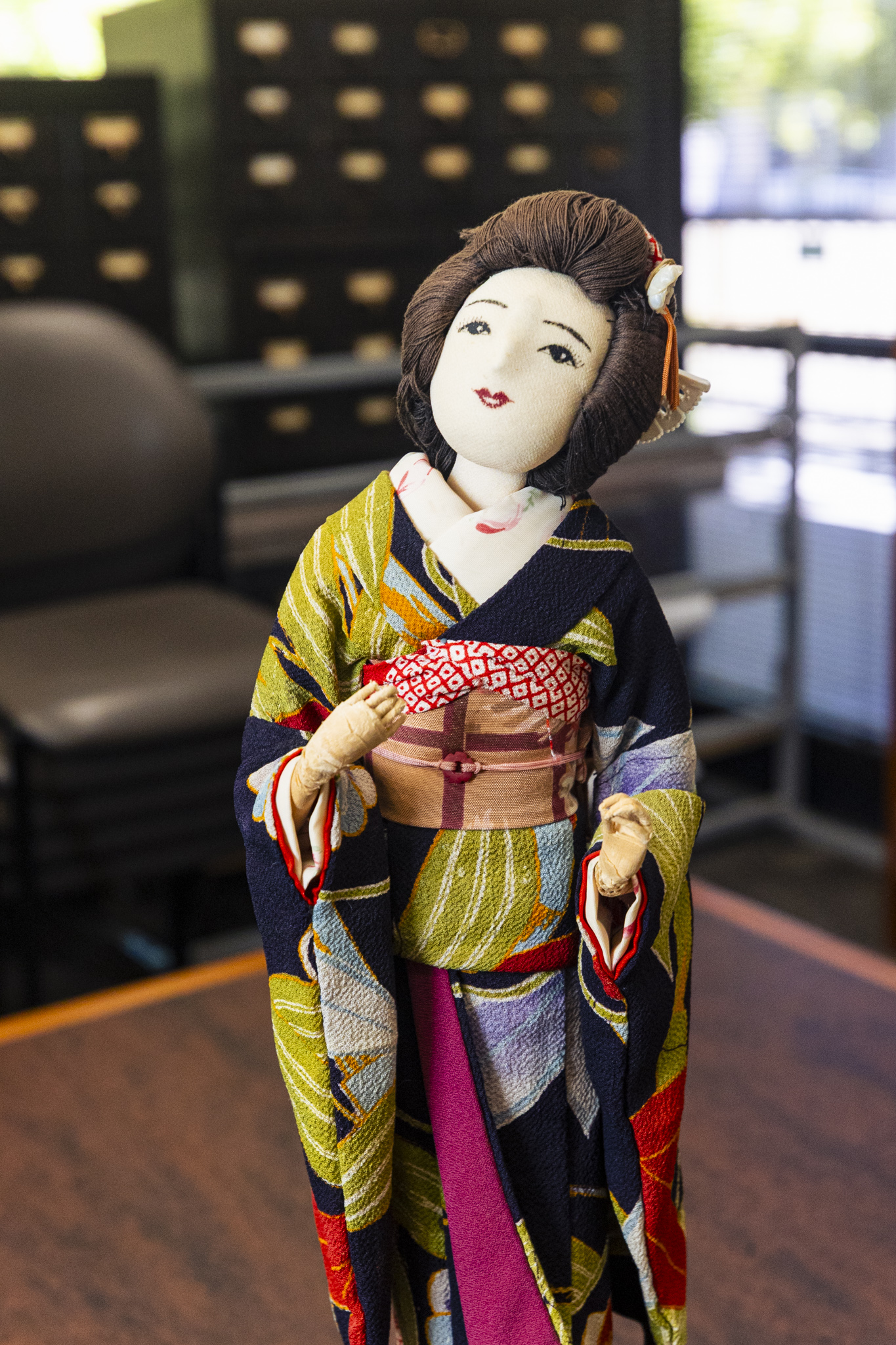
Students gain experience applying for a grant, planning a research trip, and working with archivists in the reading room.
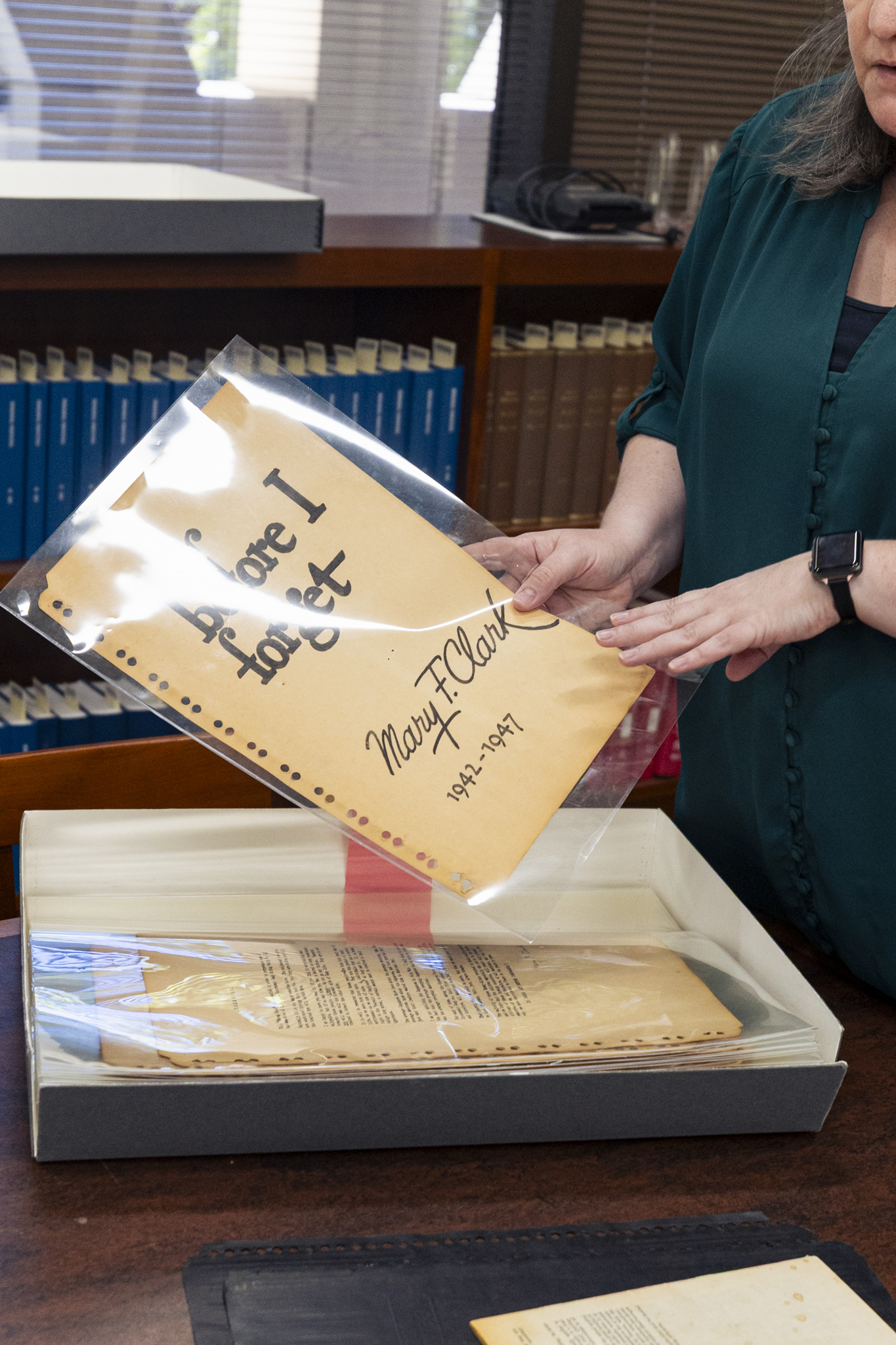
“We wanted to help the next generation of students who might be interested in continuing to do historical or archival research,” Allison said. “They physically get to look at the material and handle it.”
The digitized collection is available for anyone with Internet access to view anywhere in the world. But Allison said seeing the pieces in real life can be more rewarding.
“There’s something more ephemeral about the material being in front of you. You realize it could deteriorate, it could no longer exist, which is why we have digital preservation,” she said. “But sitting in the reading room and seeing it in a box with other materials, gives you a sense of how big the collection actually is.
“Coming in and working with an archivist adds another kind of layer, and so you just become immersed in the space and the research.”
Nate Jeffords, a sophomore at Mount Vernon Nazarene University in Ohio, spent a week working in the University Archives Reading Room.
For six hours each day, Jeffords went through photos and farm records as part of his volunteer work with the Kansha History Project, documenting the stories of Japanese American farmers before World War II.
“I’m definitely a person who likes to feel the paper and be able to flip through the pages,” he said. “They would bring out boxes and boxes of papers, and I’d just take my time looking at them and jotting down some notes.”
Jeffords’ own grandparents and great-grandparents grew corn and beans in Colusa before they were sent to an incarceration camp in Colorado. During his stay in Sacramento, he visited what was once the family farm with a cousin he’d never met before.
“It was definitely emotional being able to walk where they walked and grew up,” Jeffords said. “I’ve been really interested in my own family’s history. They were sent to the camps when they were around my age, so that really struck a chord with me.”
Continued activism
In recent years, the local Japanese American community has become active with efforts to preserve the history of Sacramento’s lost Japantown.
The city demolished the 15-block historic neighborhood near downtown in 1954 to make way for the Capitol Mall Redevelopment Project, replacing homes and businesses owned by Japanese Americans with office buildings and parking structures.
Reclaim Sacramento Japantown created a mural and is planning an exhibit at the Sacramento History Museum this fall.
University Archives is already working with community leaders to provide research and materials for the exhibit.
“In the world today, just seeing all the chaos that’s going on,” Jeffords said. “It’s good Sac State is making an effort to preserve this history so that we can remember and make sure it doesn’t happen again.”
Media Resources
Faculty/Staff Resources
Looking for a Faculty Expert?
Contact University Communications
(916) 217-8366
communications@csus.edu