Story Content
Sacramento celebrates the art and activism of the Royal Chicano Air Force
April 03, 2026
In 1970, a collective of artists and activists took flight at Sacramento State.
Two new professors harnessed the energy of students and community artists to fight for farmworkers’ rights and serve marginalized neighborhoods — using art.
Inspired by Mexican culture and Indigenous iconography, the bold, colorful imagery on posters, flyers, and murals helped shape Chicano identity and paved the way for public art support in Sacramento.
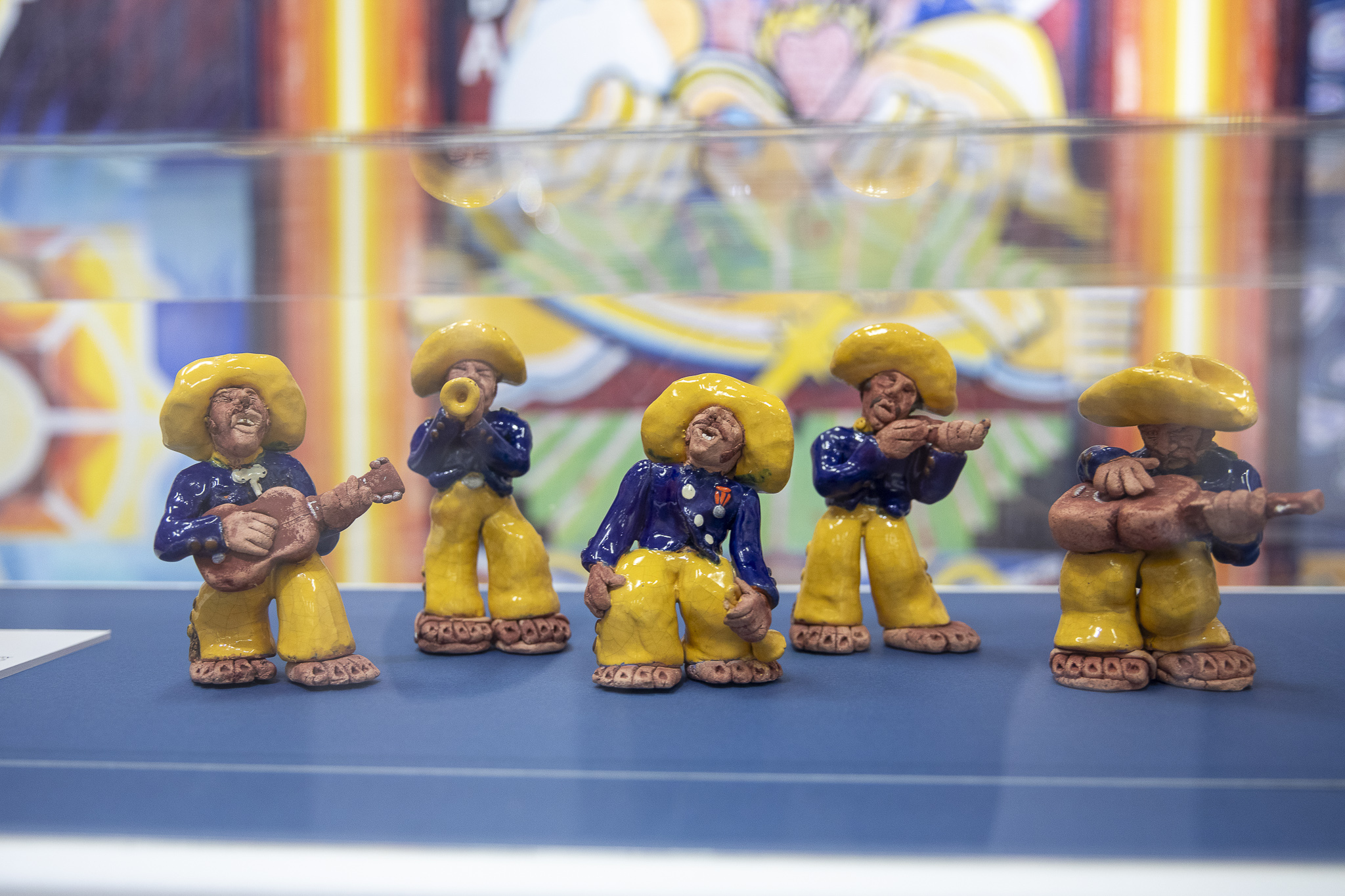
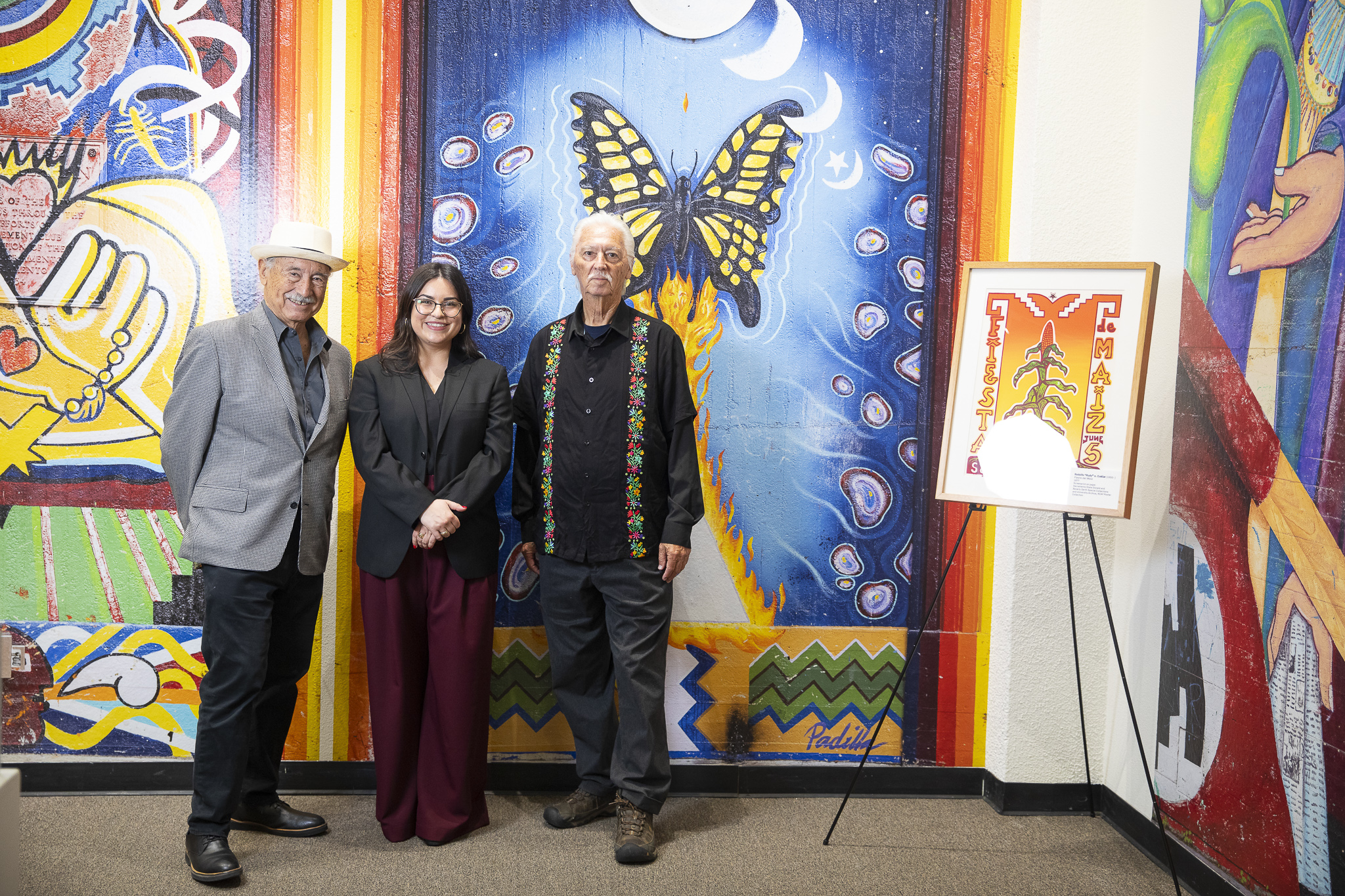
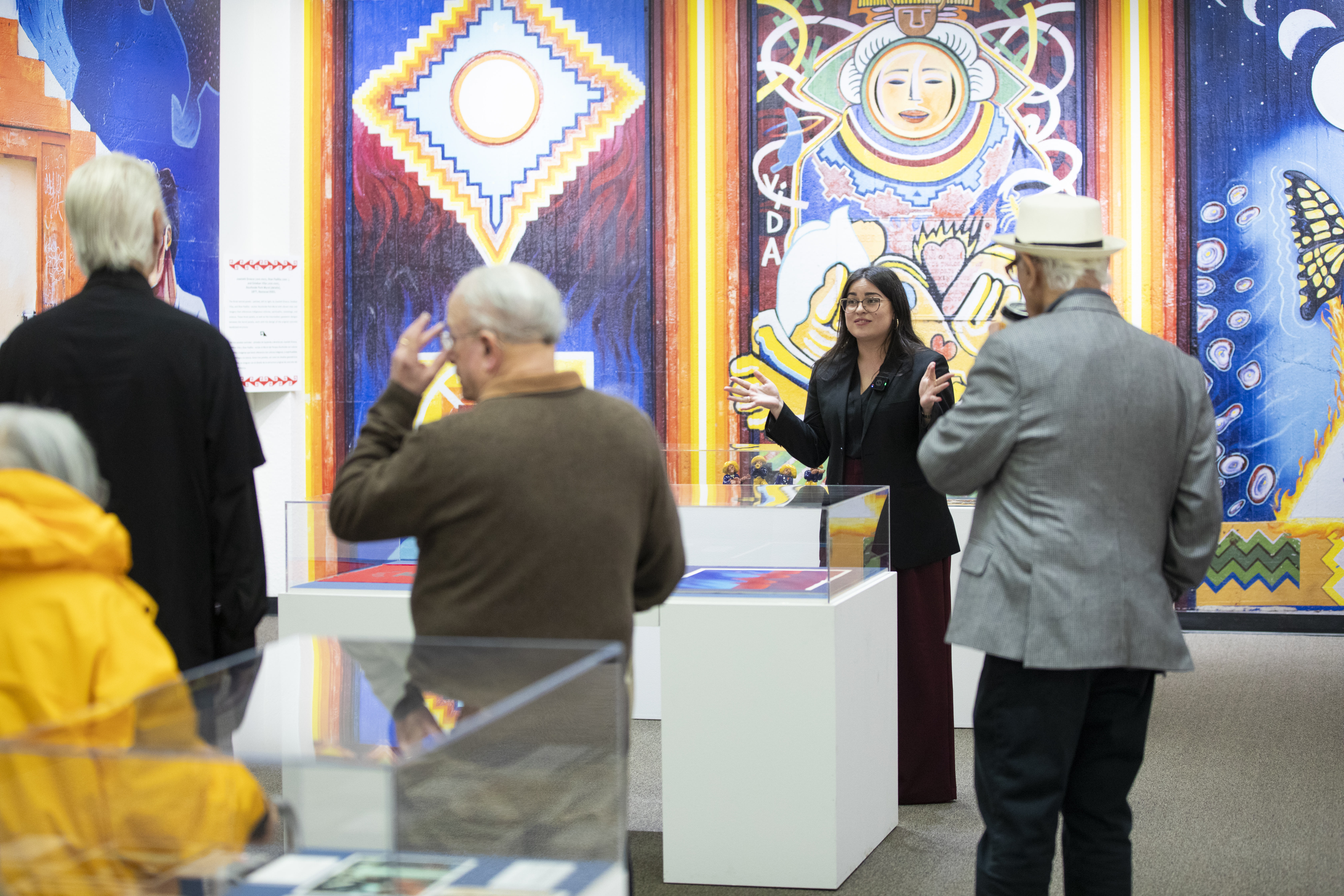
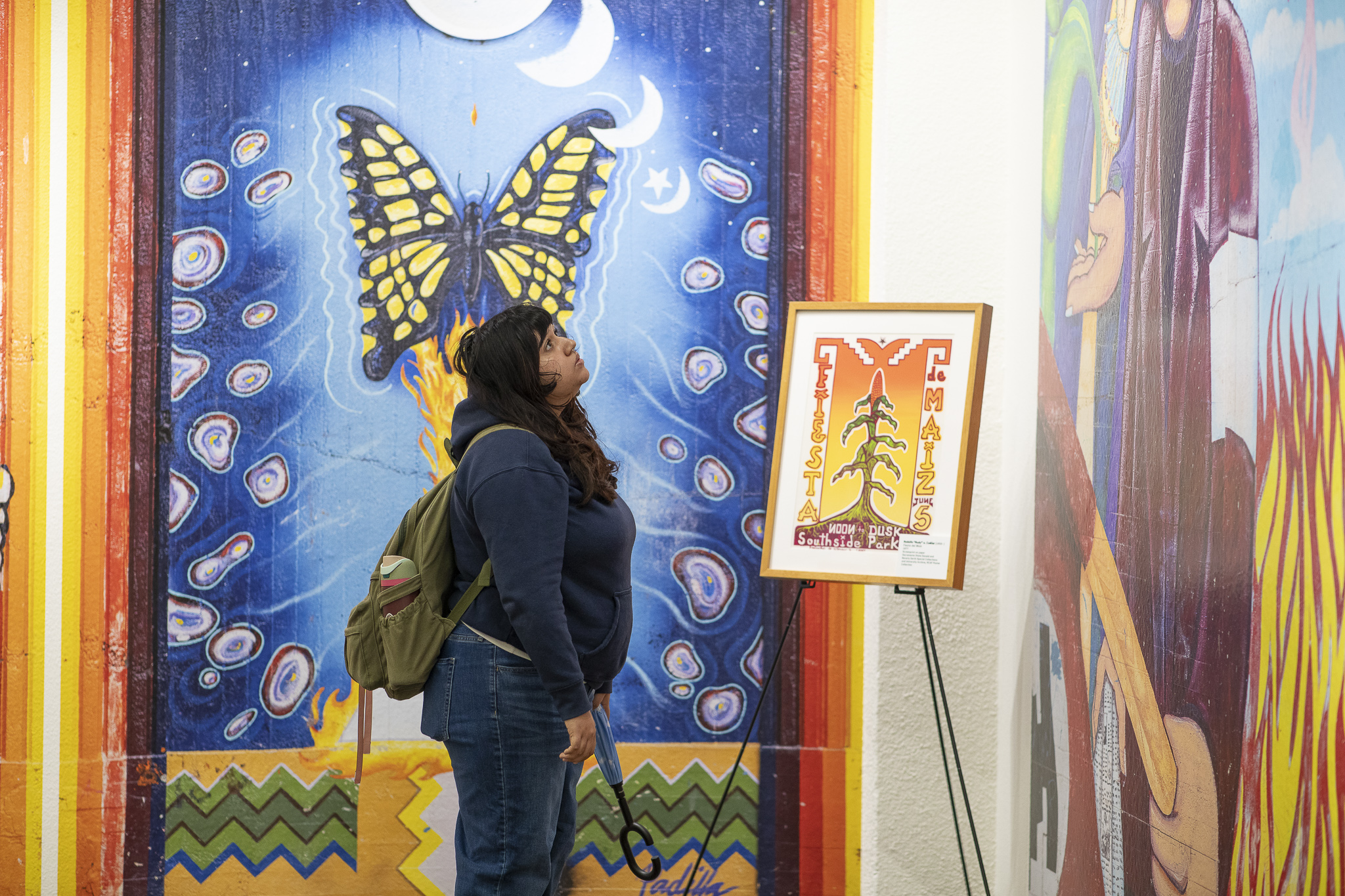
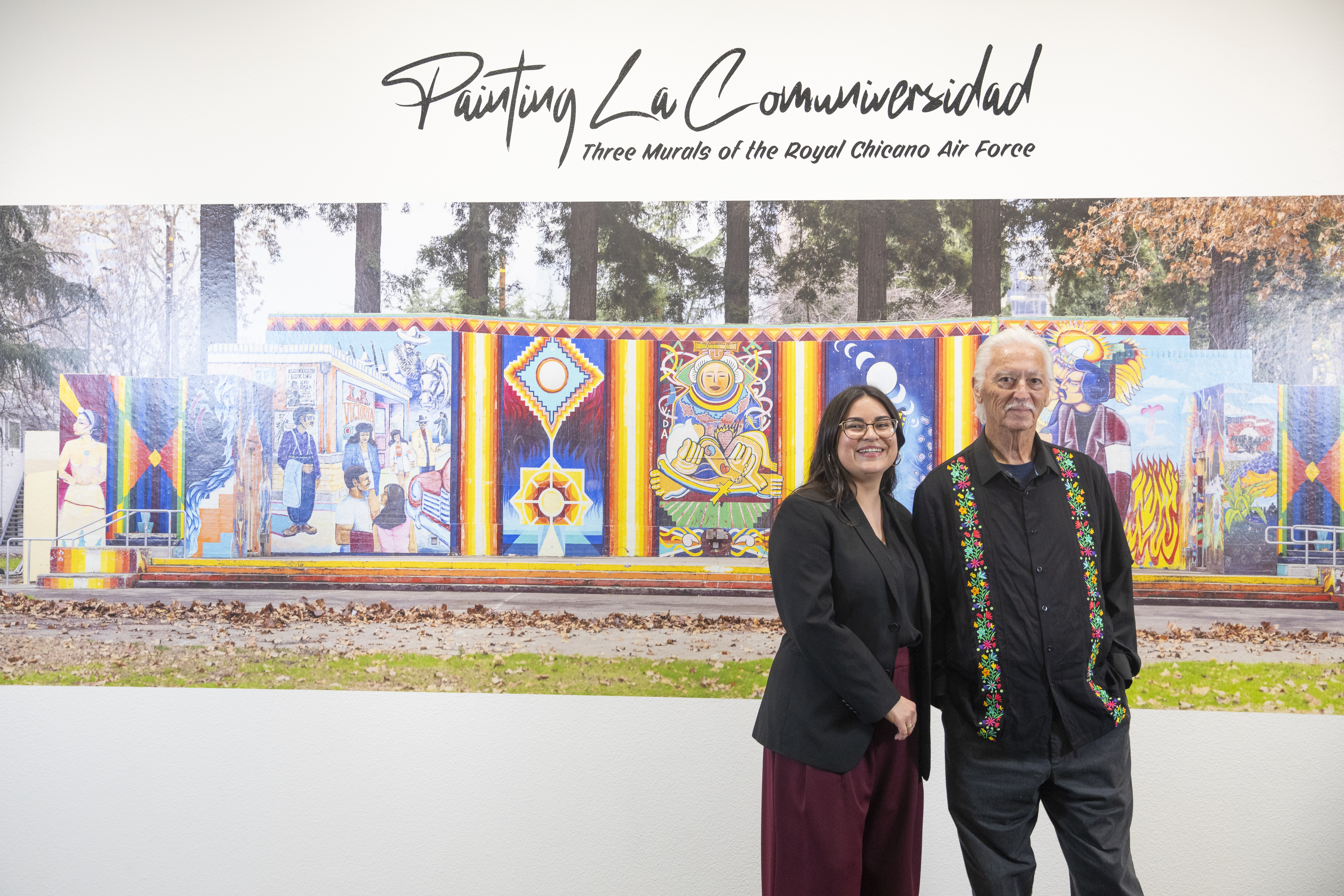
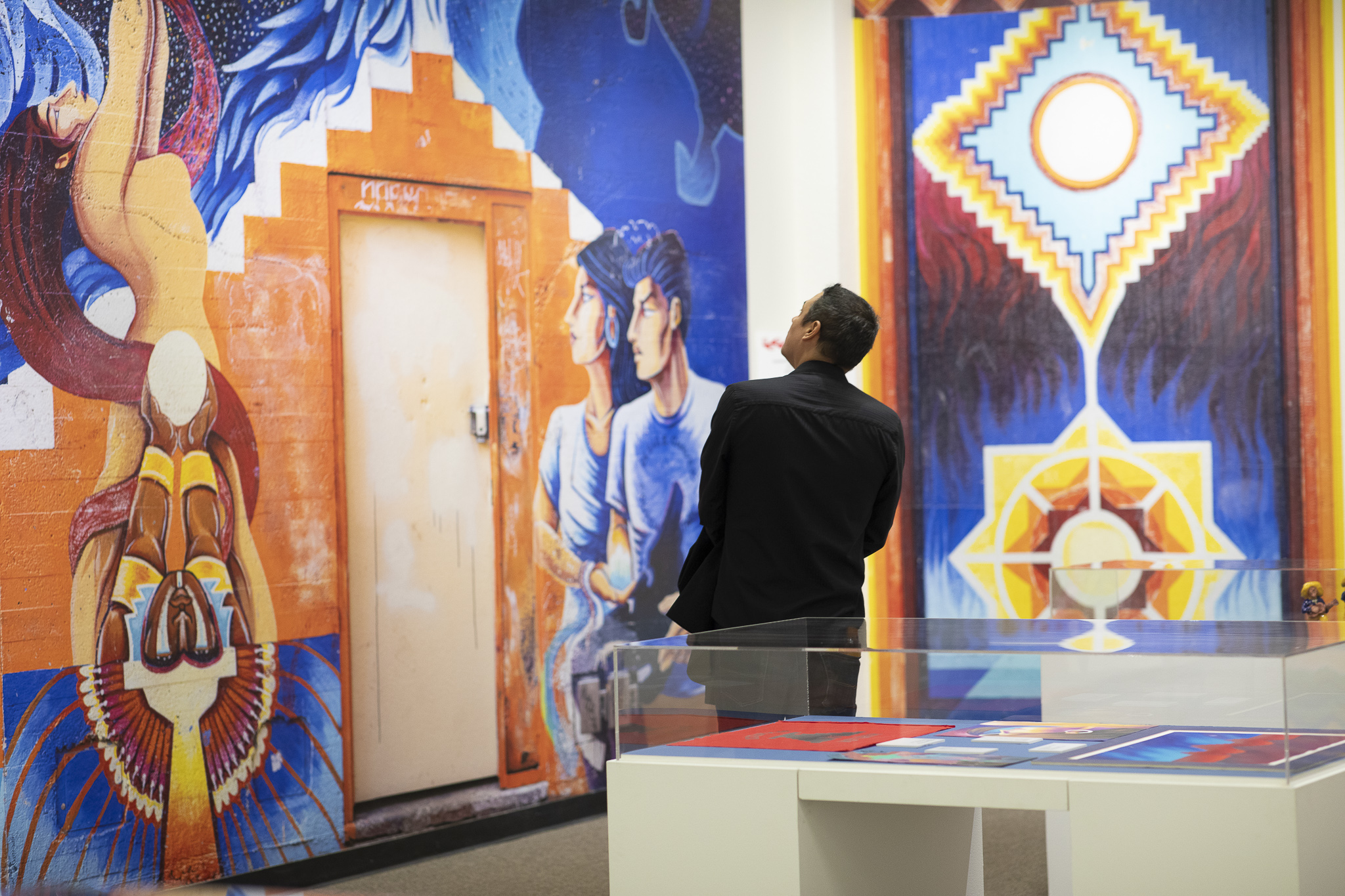
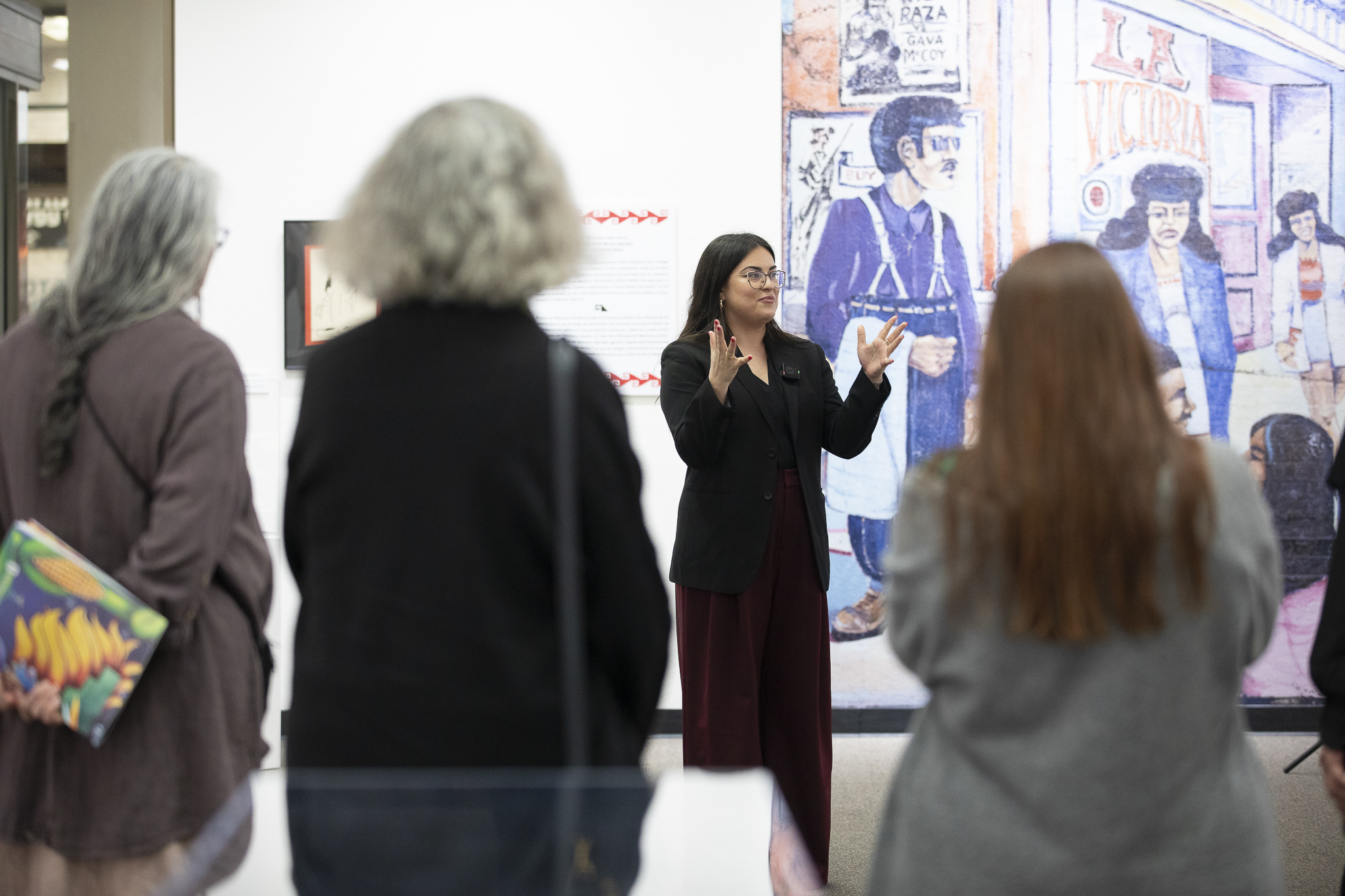
Now more than 50 years later, galleries, museums, and other arts organizations throughout the region are celebrating the Royal Chicano Air Force (RCAF) with a six-month series of events, including “Painting La Comuniversidad: Three Murals of the Royal Chicano Air Force” at the University Library Gallery.
“The RCAF’s legacy, that spirit of art and activism, continues,” said Terezita Romo, co-founder of La Raza Galeria Posada and one of the collective’s early members. “Future generations need to know what that means and how it can be incorporated into these times.”
Professors José Montoya and Esteban Villa, both practicing artists, landed at Sac State in 1969 at the height of student-led movements pushing for educational equality, ethnic representation, labor rights, and an end to the Vietnam War.
San Francisco and Los Angeles were epicenters, but Sac State — where Martin Luther King Jr. delivered a moving speech to thousands in 1967 — served as a vital hub in the capital city.
“There was so much energy because of the larger Civil Rights Movement and this consciousness about education not being equal for us, and of course all the young people getting killed in Vietnam,” said Romo. “All these different communities were looking at ways to make a difference and use that energy to do something positive.”
In their classes, Montoya and Villa exposed students to modern and ancient Mexican art often for the first time, while encouraging them to look to their own cultures and communities for inspiration.
Outside of the classroom, they formed a collective and organized campus activities involving culture and art.
“Painting La Comuniversidad: Three Murals of the Royal Chicano Air Force” runs through May 1 at the University Library Gallery. For information about “InFormation: A Celebration of the Royal Chicano Air Force” events throughout the region visit La Raza Galeria Posada.
Calling themselves the Rebel Chicano Art Front, the group of artists and activists later moved off-campus and established the Centro de Artistas Chicanos to foster art, history, education, and culture in the Mexican American community, showing the world what it meant to be Chicano.
“Their work still resonates with the world that we’re dealing with today,” said Sac State alumna Janina Sofia López, who worked on Sac State’s exhibit while studying for her PhD at the University of Pittsburgh.
“The RCAF and the Chicano Movement were really about building a community and making that community aware that we have each other. There is a network of people sharing space, sharing a meal, sharing artwork, and working collaboratively, and I think these are things that continue to be priorities for people today.”
Their work spilled into Sacramento, where public murals in Southside Park and at the Washington Neighborhood Center stirred community and cultural pride.
“Murals were very important because they were public, and anyone could see them,” Romo said. “It was very much about claiming space and saying, ‘We see you, and we’re reflecting you. We’re reflecting the community.’”
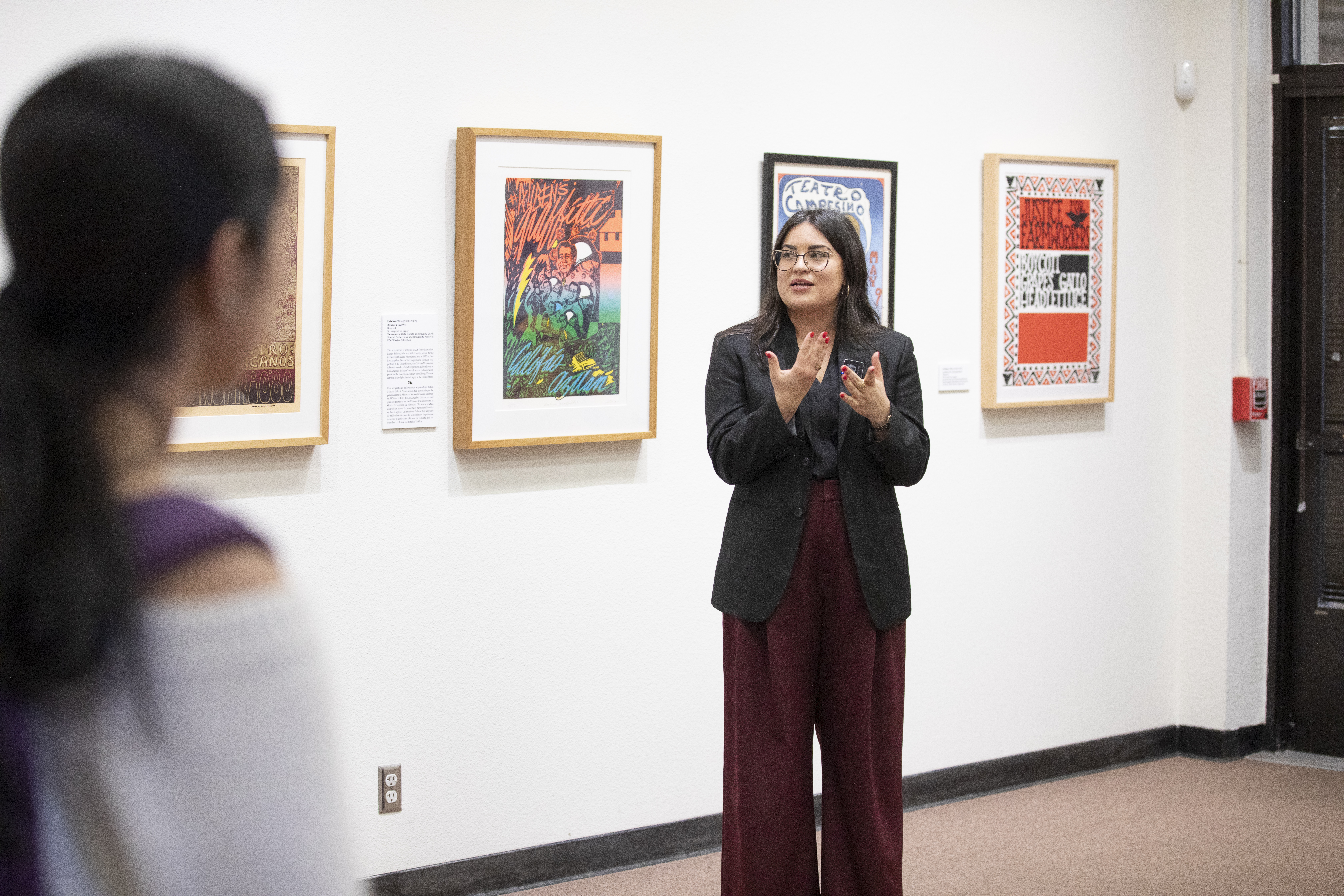
Many collective members grew up working in the fields under the hot California sun with their parents, so they were quick to align with the United Farm Workers Union. They designed posters and flyers for fundraisers, boycotts, and demonstrations, producing thousands of copies overnight through the screenprinting process.
They signed their pieces with the initials, RCAF.
“People kept asking them if they were part of the Royal Canadian Air Force, and they just went with it,” López said. “They were like, ‘No. We’re the Royal Chicano Air Force.’
“They embraced the imagery, and it became part of their whole persona.”
RCAF members would show up to events in flight suits with aviator goggles and headsets, even arriving at a protest in Woodland in a military Jeep.
“Their humor shows up throughout their work,” López said. “Spending time with the artists and their families, we’re laughing all the time. Laughter is a way to bring people together, but it’s also a way to talk about really difficult things and to be able to see a path forward at times when it’s often hard to see.”
RCAF artists used the Western art techniques they learned in the classroom and drew on their own cultural influences, imagery they saw in their homes, and even comics and pop art to create their pieces.
“They were reinterpreting it but also being very cognizant that they were reflecting and responding to their community as well,” Romo said. “It wasn’t about building a career as an artist. José Montoya talked about how ludicrous that was with everything that was going on.
“But the visual arts became a great tool for artists to serve and benefit the community and the larger movement. Art was a way of telling their own story visually.”
At one point, there were as many as 15 RCAF murals in Sacramento.
RCAF’s legacy continues today.
In 2022, a new assistant art professor, Luis García, resurrected Barrio Art, a program that Montoya and Villa had developed at Sac State in the early ‘70s.
García and his students have helped Washington Elementary School teachers and kids create their own mural as well as organize community events. His goal is to show his students, who will likely become art educators, how to engage in the communities they work in.
“I didn’t want to focus on teaching about the principles of design,” García said. “My goal is to show students how to use art to explore their own identities and to develop a consciousness of what is going on in their own communities. Use art to challenge or counter the circumstances that exist in their communities.”
Today, pieces by RCAF artists can be found in museums and universities throughout the United States and Europe, including Enrique Ortiz’s “Tlaloc” in Sacramento Hall.
Some outdoor murals such as “Southside Park” and “Metamorphosis” on the Downtown Commons West Garage, survived the elements.
Villa’s “Emergence of the Chicano Social Struggle in a Bi-cultural Society,” which he painted with his students inside the Washington Neighborhood Center is one of the oldest existing Chicano murals in the country.
In 2018, RCAF artists Juanishi Orosoc, Stan Padilla, and Esteban Villa completed a 35-foot mural called “Flight” at the Golden 1 Center with the help of their children and grandchildren.
The piece was funded by the city’s 1979 2% for Art ordinance, which requires setting aside two percent of construction costs for eligible projects for public art.
Artist Juan Carrillo, who taught social science at Cosumnes River College and became director of the California Arts Council, called his years with the RCAF “transformative.”
“Being among artists dedicated to community transformed me from a man who didn’t know what he was going to do with the rest of his life to someone whose life and art had purpose,” he said.
Romo, a curator and an activist with RCAF who earned her master’s degree in Art History from Sac State, spent three years researching and tracking down posters to include in her exhibition “Rebels With La Causa: Royal Chicano Art and Activism, 1970-1990” at the Crocker Art Museum.
The celebration soon spread. Romo invited other museums, galleries, and organizations, including the University Library Gallery, to collaborate in La Raza Galeria Posada’s regional series “InFormation: A Celebration of the Royal Chicano Air Force.”
López will be in Sacramento leading tours of "Metamorphosis" on April 8 and and the "Southside Park" mural on April 12.
“It really confirms that what we were doing was real and lasting and meant something,” RCAF artist Stan Padilla said during a recent tour of Painting La Comuniversidad at Sac State.
“At the time, all this wasn’t accepted. It wasn’t ‘muralism.’ So, it’s just a whole different attitude, and it’s rewarding to see the growth of it all, and to see that it’s about education.”
Media Resources
Faculty/Staff Resources
Looking for a Faculty Expert?
Contact University Communications
(916) 217-8366
communications@csus.edu